Choosing between a luxury SUV and an executive sedan for an airport transfer in Dubai depends on more than appearance or brand reputation. Passenger numbers, suitcase sizes, seating comfort, luggage capacity and the purpose of the journey all influence which vehicle is the more practical choice.
An executive sedan can be ideal for a business traveller who wants a comfortable, quiet journey from Dubai International Airport to a hotel or meeting. A luxury SUV may be more suitable for a family carrying several suitcases, travellers who prefer a higher seating position or passengers who need additional cabin flexibility.
Both categories can offer premium interiors and a professional chauffeur experience. However, their strengths are different, and selecting the wrong vehicle can make an otherwise straightforward airport journey less comfortable.
This guide compares luxury SUVs and executive sedans for airport transfers in Dubai, including passenger space, luggage, comfort, cost, business travel and family requirements.
1. What Is the Difference Between a Luxury SUV and an Executive Sedan?
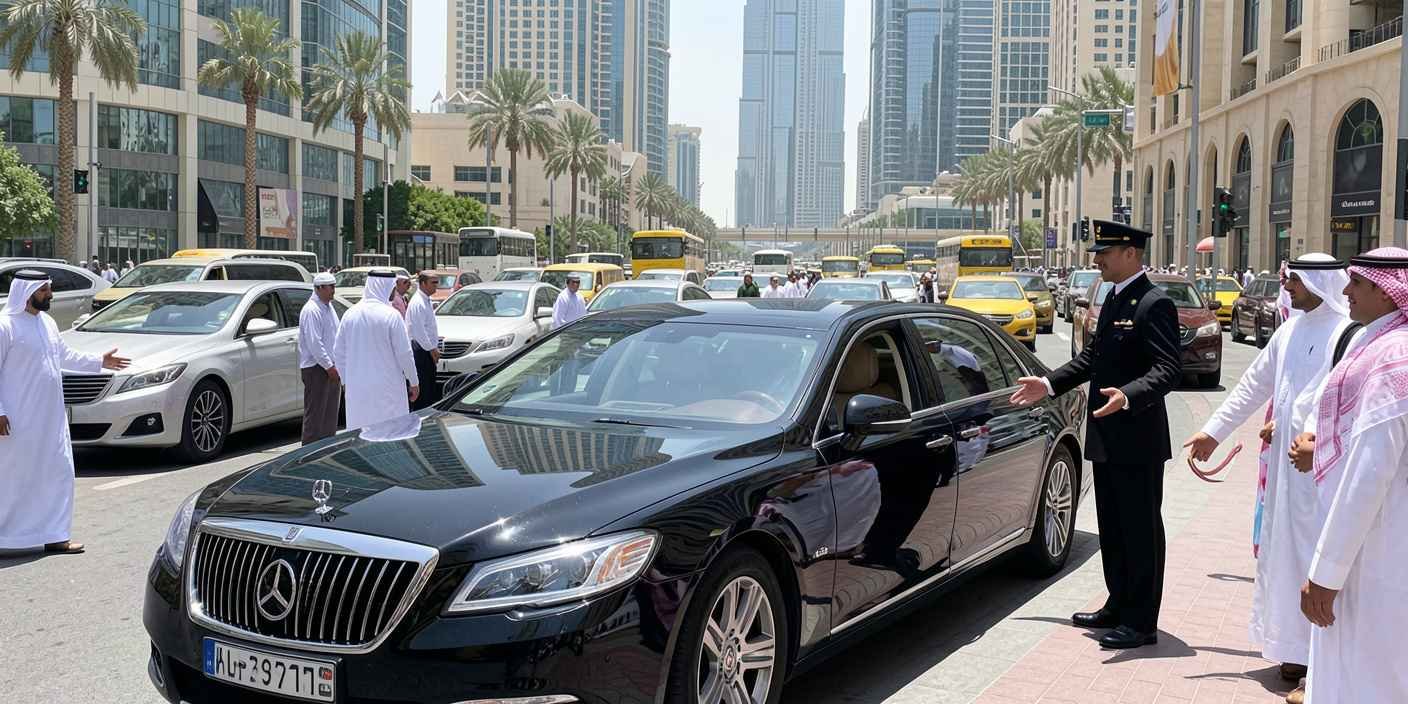
An executive sedan is a traditional four-door car designed around a lower seating position, a streamlined body and a refined passenger cabin. These vehicles commonly appeal to business travellers, couples and individuals who prioritise a comfortable, sophisticated journey.
Examples include the BMW 7 Series and the Lexus ES 350. Although these sedans differ in size, equipment and character, both illustrate the executive-car approach to private transportation.
A luxury SUV combines a taller body with a higher seating position and, depending on the model, a larger passenger compartment. Some SUVs also provide additional seating rows, making them useful for families or groups.
For example, the Lamborghini Urus represents a performance-focused luxury SUV, while the Rolls-Royce Cullinan represents a more traditional ultra-luxury approach.
The important distinction is that not every SUV carries more passengers or luggage than every sedan. Capacity depends on the particular model, its seating configuration and how much space remains when all seats are occupied.
2. Which Vehicle Offers More Luggage Space?
Luggage capacity is one of the most important considerations when arranging an airport pickup. A vehicle may have enough seats for everyone but still lack sufficient room for their suitcases.
Executive sedans generally work well for individuals and small parties travelling with a manageable amount of luggage. Their boots can accommodate everyday suitcases, but large or unusually shaped bags may limit what fits.
Luxury SUVs often provide a more flexible luggage area, particularly when passengers do not need to use every available seat. However, the third row in a larger SUV can reduce the remaining luggage space when it is in use.
The best choice therefore depends on the number and size of the bags rather than the vehicle category alone.
Before confirming a booking, consider:
- The total number of passengers, including children.
- The number of large checked suitcases.
- The number of cabin bags, strollers or other bulky items.
- Whether all passenger seats will be occupied.
- Whether any special equipment needs to travel with the group.
For instance, two business travellers with one suitcase each may be perfectly comfortable in an executive sedan. A family of four with several large suitcases may benefit from an SUV with sufficient luggage space.
Always confirm luggage capacity for the actual vehicle rather than relying on a general assumption that every SUV has a larger boot.
3. Passenger Comfort After a Long Flight
After a long flight, passengers may appreciate a vehicle that allows them to settle in, adjust the climate and relax during the journey to their destination.
Executive sedans are designed to offer a composed ride, comfortable seating and a refined cabin. Their lower seating position may suit passengers who prefer the feel of a traditional luxury car, particularly when travelling alone or with one companion.
Luxury SUVs offer a different experience. Their higher seating position can provide a more elevated view of the road, while some models have more flexible cabin layouts and easier access for certain passengers.
However, a higher seating position does not automatically mean an SUV is more comfortable. Seat design, suspension, tyre condition, cabin noise and the actual vehicle specification all affect the ride.
Passengers who value a quiet, conventional executive environment may prefer a sedan. Those who appreciate additional cabin space or easier access may favour an SUV.
The distance also matters. A short transfer from the airport to a nearby hotel places different demands on comfort than a longer journey across Dubai or to another emirate.
4. Which Is Better for Business Travellers?
For business travel, the decision often comes down to the number of passengers, the amount of luggage and the nature of the itinerary.
An executive sedan can be a practical choice for a solo executive or two colleagues travelling to a hotel, office or conference venue. The cabin offers a private environment in which passengers can prepare for a meeting, review notes or relax between appointments.
A luxury SUV can be useful when several colleagues are travelling together or when the itinerary includes multiple stops. It may also be appropriate when passengers have additional luggage, presentation equipment or other business materials.
The vehicle’s appearance can influence the experience, but it should not be the only deciding factor. Punctuality, route planning, a clean interior and a professional chauffeur are important for either category.
For a single executive with limited luggage, a sedan may provide everything needed. For a small team arriving together, an SUV may reduce the need to arrange multiple vehicles.
5. Is a Luxury SUV Better for Families?
Families often have different requirements from business travellers. They may be travelling with children, pushchairs, shopping bags or several suitcases, and the ease of getting in and out of the vehicle can be important.
A luxury SUV can offer a practical combination of passenger space and a higher seating position. Depending on the model, it may also provide a second or third row, giving families more flexibility.
An executive sedan can still be suitable for a couple or a small family travelling with limited luggage. However, parents should consider child-seat requirements, rear-seat space and the room needed for everyday items.
The number of available seats alone is not enough to determine suitability. A vehicle carrying passengers in every row may have limited space for luggage, so families should confirm the complete seating and baggage arrangement before travelling.
If the group includes several children and adults, or needs a more flexible cabin layout, a chauffeur-driven van or passenger vehicle may be more practical than either a conventional sedan or a smaller SUV.
6. Airport Pickup and Drop-Off Convenience
Airport transportation involves more than the ride itself. Passengers need to reach the correct pickup point, load their luggage and continue to their destination without unnecessary confusion.
A sedan may be convenient for a small party with a few bags. Its traditional car layout works well for individual travellers and couples who do not need extensive passenger space.
An SUV can make loading bulkier luggage easier in some configurations and may provide more flexibility for families. Its overall size, however, can also make access and parking less convenient in certain locations.
The most suitable vehicle depends on the airport pickup arrangements, the number of passengers and the destination. It is useful to share flight details, passenger numbers and luggage information before the journey.
Travellers arranging a Dubai airport transfer should confirm the pickup terminal, flight arrival details, waiting arrangements and destination in advance. These practical details matter regardless of whether the vehicle is an SUV or a sedan.
7. Ride Quality on Dubai’s Roads
Dubai’s road network includes urban streets, busy airport approaches, motorways and longer routes between residential, hotel and business districts. Both luxury SUVs and executive sedans can be suitable for these conditions, but they may feel different on the road.
Executive sedans generally have a lower centre of gravity and a more traditional car-like driving character. Depending on the model, they may offer a composed ride and a cabin designed to minimise the effects of road noise.
Luxury SUVs have a taller body and higher seating position. Some are tuned primarily for comfort, while others emphasise performance or off-road capability. Their ride quality can vary significantly between models.
Wheel size, suspension design, tyres, maintenance and vehicle load all influence comfort. It is therefore not accurate to claim that every sedan rides more smoothly than every SUV, or that an SUV always handles poor road surfaces better.
For passengers, the practical question is how the specific vehicle feels during the intended journey. A comfortable, well-maintained example of either category can provide a pleasant transfer.
8. Which Vehicle Is More Cost-Effective?
The cost of an airport transfer can vary according to the vehicle, route, booking terms and service requirements. Luxury SUVs may carry a higher rate than some executive sedans, but this is not universal. Ultra-luxury sedans can also command premium rates.
When comparing quotes, check whether the prices cover the same journey. A useful comparison includes:
- The same pickup and drop-off locations.
- The same number of passengers.
- The same luggage requirements.
- The same waiting period and pickup arrangements.
- Any applicable tolls, parking or additional charges.
- Whether the quoted price is for a transfer or a longer booking.
For one passenger with a small suitcase, choosing a large SUV may mean paying for space that is not needed. For a family with several bags, choosing a smaller sedan may create a more significant problem if the luggage does not fit.
Cost-effectiveness is therefore about matching the vehicle to the journey, not simply selecting the lowest advertised price.
9. Luxury SUVs vs Executive Sedans for VIP Arrivals
Some airport journeys place greater emphasis on the vehicle’s design and overall impression. This may apply when welcoming an important guest, attending a formal event or arranging transportation for a special occasion.
An executive sedan offers a traditional luxury-car appearance. It can be appropriate for corporate guests and travellers who prefer understated styling.
A luxury SUV creates a different impression through its taller body, commanding road presence and, in some models, a more spacious cabin. Ultra-luxury SUVs can combine this visual impact with carefully finished interiors and premium comfort features.
However, a prestigious badge does not automatically make a vehicle the right choice. The passenger’s preferences, luggage requirements and the purpose of the journey should remain central to the decision.
For routine airport transportation, practicality may matter most. For a VIP arrival, both the vehicle’s presentation and the quality of the overall pickup experience may carry additional importance.
10. What If You Are Travelling With More Than Four Passengers?
When the travelling party grows, the decision may move beyond a standard SUV or executive sedan.
A sedan is usually best suited to a small number of passengers, subject to the vehicle’s approved seating capacity. Some SUVs offer additional seating, but the amount of luggage space available can decrease when all seats are occupied.
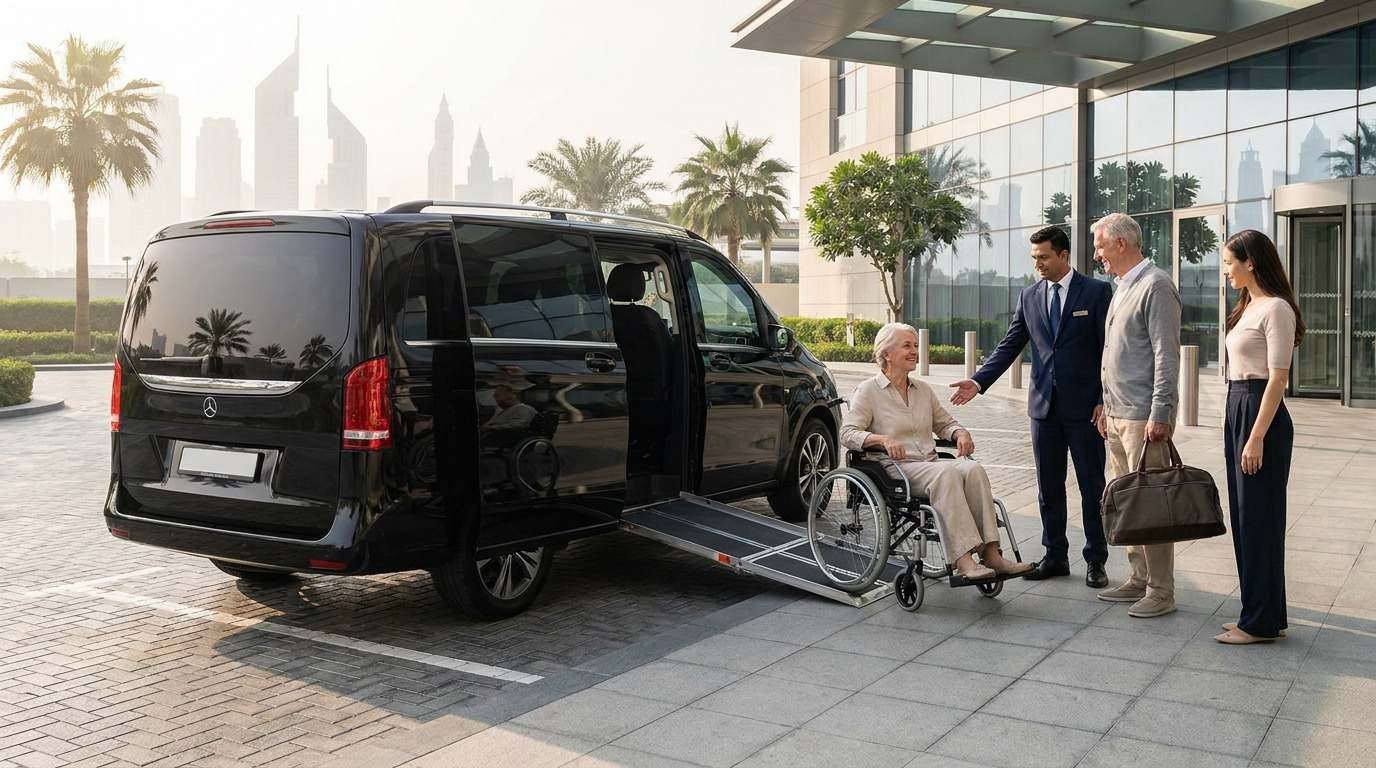
For larger families or groups, a passenger van may offer a more practical layout. Vehicles such as a Mercedes-Benz V-Class or Toyota Hiace can provide different seating arrangements, depending on the configuration.
For airport travel, the key is to balance passenger capacity with luggage space. A vehicle that technically seats everyone may still be unsuitable if the group has several large suitcases.
If a group is too large for one suitable vehicle, arranging more than one vehicle may be preferable to compromising passenger comfort or luggage safety.
11. SUV vs Sedan: Quick Comparison
| Factor | Executive sedan | Luxury SUV |
|---|---|---|
| Best suited to | Solo travellers, couples and small business parties | Families, small groups and passengers needing additional space |
| Seating position | Lower, traditional car seating | Higher seating position |
| Luggage flexibility | Suitable for moderate luggage, depending on the model | Can offer more flexibility, depending on seats and configuration |
| Cabin experience | Refined, executive-oriented environment | More elevated seating and potentially more flexible space |
| Passenger access | Conventional car doors and seating | Higher entry; can be easier or harder depending on passenger needs |
| Business travel | Suitable for individual executives and small parties | Useful for groups, extra luggage and multi-stop itineraries |
| Family travel | Works for small families with limited luggage | Often practical when more space is needed |
| Cost | May be economical when a smaller vehicle is sufficient | Can cost more, depending on the vehicle |
| Main limitation | Boot and cabin space can be restrictive for larger loads | Size and third-row use may affect luggage space |
These are general comparisons. Actual passenger and luggage capacity must be confirmed for the specific vehicle.
12. How to Choose the Right Vehicle for Your Airport Transfer
Before making a booking, consider the entire journey rather than choosing a vehicle based only on appearance.
First, count the passengers and identify how much luggage each person will bring. Then consider whether anyone needs extra assistance getting into the vehicle, whether child seats are required and whether the group will have bulky items.
Next, think about the purpose of the journey. A solo business traveller going directly to a hotel may find a sedan perfectly suitable. A family with several bags may benefit from an SUV. A group with many passengers may need a van or a larger passenger vehicle.
Finally, confirm the vehicle’s actual configuration and the terms of the transfer. Check the pickup location, destination, waiting arrangements and any additional charges before the journey.
Reviewing the available chauffeur fleet can help you compare vehicle categories before deciding which one best fits your requirements.
Frequently Asked Questions
Is an SUV always better than a sedan for airport transfers?
No. An SUV can be useful for families and passengers carrying bulky luggage, but a sedan may be more suitable for one or two travellers with a small amount of baggage. The correct choice depends on the actual passenger and luggage requirements.
How many suitcases can a luxury SUV carry?
There is no single answer for all luxury SUVs. Boot capacity varies by model, and using a third seating row can reduce the available luggage area. Confirm the number and size of suitcases with the provider before booking.
Is an executive sedan suitable for a family airport transfer?
Yes, if the family fits within the approved seating capacity and the vehicle has enough room for their luggage and any required child seats. A larger vehicle may be more practical for families with several bags or additional passengers.
Which vehicle is better for business airport transfers?
An executive sedan is often a good fit for a solo executive or a small party with limited luggage. An SUV can be preferable when colleagues are travelling together or when extra baggage and equipment need to be carried.
Should I choose a luxury SUV for a long journey from Dubai Airport?
A luxury SUV can be suitable for a long journey, but comfort depends on the specific vehicle, seating, suspension and passenger preferences. A well-equipped executive sedan may also provide excellent comfort for long-distance travel.
What details should I provide when booking an airport transfer?
Provide the flight number, arrival date and time, pickup terminal, destination, number of passengers and quantity of luggage. Mention child-seat requirements or oversized items in advance so the vehicle can be selected appropriately.
Conclusion
The choice between a luxury SUV and an executive sedan for airport transfers in Dubai comes down to practical needs and personal preferences.
An executive sedan is often a sensible option for solo travellers, couples and business passengers who want a refined journey with a manageable amount of luggage. A luxury SUV may be better for families, small groups and passengers who need additional cabin or luggage flexibility.
Neither category is automatically superior. The best vehicle is the one that accommodates the passengers and their belongings comfortably, suits the journey and fits the budget.
By confirming passenger numbers, suitcase sizes, vehicle configuration and pickup arrangements before travelling, passengers can make a more informed decision and avoid the inconvenience of choosing a vehicle that does not meet their needs.