Managing Luggage Overspill During Peak Travel Months in the UAE
Introduction: The Peak Season Luggage Dilemma
Peak travel season in the United Arab Emirates presents a unique set of challenges for travellers, with luggage overspill ranking among the most persistent and frustrating issues. The UAE's travel calendar features multiple peak periods throughout the year, each bringing its own pressures on transportation, accommodation, and baggage handling infrastructure.
The winter season, spanning November through April, draws millions of visitors escaping colder climates, with Dubai International Airport (DXB) consistently ranking among the world's busiest aviation hubs. During these months, average monthly international visitor numbers comfortably exceed 1.4 million, placing enormous strain on every aspect of the travel ecosystem. The intensity intensifies further during school holidays, the Eid al-Adha period, and the summer months when families and business travellers converge on the UAE's world-class attractions and commercial centres.
Dubai International Airport has witnessed single-day passenger volumes peak at over 250,000 during these periods, creating a perfect storm of congestion, delayed baggage handling, and overwhelmed transport services. For the unprepared traveller, arriving with multiple suitcases, sports equipment, shopping hauls, or oversized items can quickly transform what should be an exciting journey into a logistical nightmare.
This comprehensive guide explores every aspect of luggage management during peak travel months, providing practical strategies, detailed solutions, and expert insights to ensure your travels remain smooth, stress-free, and enjoyable regardless of how many bags you carry.
Understanding the Peak Season Luggage Challenge
The Scale of the Problem
The UAE's position as a global crossroads of commerce, tourism, and culture means its peak travel seasons are unlike those of almost any other destination. The convergence of business travellers attending major conferences and exhibitions, leisure tourists visiting world-famous attractions, expatriates returning for holidays, and transit passengers connecting between continents creates an unprecedented demand for luggage-related services.
During the busiest periods, airports, hotels, and transport providers operate at or near maximum capacity. Baggage reclaim areas become crowded and chaotic, with travellers often waiting extended periods for their luggage to arrive on carousels. The sheer volume of bags in transit increases the likelihood of mishandling, delays, and lost luggage, making it essential for travellers to have contingency plans in place.
Why Luggage Overspill Is More Than an Inconvenience
Luggage overspill is not merely a matter of inconvenience; it can have significant practical and financial implications for travellers. For business professionals, arriving at a crucial meeting with heavy luggage in tow creates a poor impression and undermines professionalism. The inability to store bags securely before hotel check-in can disrupt carefully planned itineraries and force travellers to either drag luggage through meetings or miss important engagements altogether.
For families, the challenges multiply. Children's entertainment, nappies, changes of clothing, and comfort items all add to the baggage burden. During peak seasons, when hotels are fully booked and early check-in is rarely possible, families may find themselves stranded with multiple suitcases and no place to store them while waiting for their rooms to become available.
The financial costs of poor luggage planning can be substantial. Last-minute excess baggage charges at airport counters are significantly higher than pre-booked allowances. Emergency purchases of clothing or essentials when luggage is delayed can quickly erode travel budgets. Storage fees during peak periods command premium rates, and the cost of replacing items that are damaged or lost due to overcrowded baggage handling systems can run into thousands of dirhams.
Airport-Specific Challenges During Peak Months
Dubai International Airport (DXB) handles the majority of the UAE's passenger traffic and faces the most acute peak season pressures. Terminal 3, primarily serving Emirates airline, experiences extreme congestion during the winter months and holiday periods. Baggage handling systems operate at full capacity, and the sheer volume of luggage moving through the airport creates delays at every stage of the journey.
Abu Dhabi International Airport (AUH) and Sharjah International Airport (SHJ) also experience significant peak season surges. While these airports are generally less congested than DXB, they too face challenges during the busiest periods, particularly when handling charter flights, seasonal routes, and the influx of visitors to the UAE's cultural and entertainment destinations.
Travellers should be aware that peak season pressures extend beyond passenger terminals. Arrival halls, taxi ranks, and ride-hailing pickup points become crowded and disorganised during busy periods, making it difficult to manage multiple bags while navigating through throngs of fellow travellers. The queues for luggage trolleys, porter services, and ground transportation can add significant time to the arrival process, increasing traveller stress and fatigue.
Pre-Trip Planning: Your First and Most Effective Defence
Smart Packing Strategies
The most effective way to manage luggage overspill begins long before you reach the airport, with thoughtful and strategic packing decisions that maximise space while minimising weight.
Rolling Versus Folding: The debate between rolling and folding clothes has been definitively settled by frequent travellers and luggage experts. Rolling clothes rather than folding them can increase suitcase capacity by up to 30 per cent while significantly reducing wrinkles. This technique is particularly effective for casual wear, t-shirts, and lightweight fabrics. For more formal attire, a combination approach works best: roll casual items and fold dress shirts and suits using tissue paper to prevent creasing.
The Capsule Wardrobe Approach: Creating a capsule wardrobe for travel involves selecting versatile, mix-and-match pieces that can be worn in multiple combinations. This reduces the total number of items needed while ensuring you have appropriate outfits for every occasion. Neutral colours, layering pieces, and accessories that can transform an outfit all contribute to a more efficient packing strategy.
Wear Your Heaviest Items: Wearing bulky jackets, hoodies, and your heaviest shoes on the flight is a simple but surprisingly effective way to reduce checked luggage weight and free up valuable suitcase space. This strategy is particularly useful during winter months when warm clothing would otherwise consume significant space in your luggage.
Leaving Space for Souvenirs: For travellers planning to shop during their stay, leaving spare space in outbound luggage can prevent a frustrating return journey. Consider packing a collapsible duffel bag as an extra piece of luggage for the return trip, or plan to ship purchases home rather than attempting to carry everything back.
The Importance of Weighing and Measuring
A surprisingly high proportion of travellers arrive at the airport unaware that their luggage exceeds weight limits. This oversight leads to stressful repacking at check-in counters, last-minute excess baggage charges, and in some cases, items being abandoned at the airport.
Investing in a reliable portable luggage scale is one of the smartest travel purchases you can make. These compact devices allow you to weigh your bags at home and make adjustments before heading to the airport. For travellers taking multiple flights with different airlines, checking weight limits for each carrier is essential, as allowances can vary significantly.
Measuring checked luggage dimensions is equally important, particularly when travelling with irregularly shaped items such as sports equipment, musical instruments, or large shopping hauls. Airlines enforce size restrictions strictly, and oversized items may be refused or subject to substantial additional charges.
Early Check-In and City Check-In Services
Many airlines and airports now offer early check-in services that allow travellers to drop their luggage hours before the scheduled departure time. These services are particularly valuable during peak seasons when airports are crowded and check-in queues are long.
City check-in services, available at select locations in Dubai and Abu Dhabi, allow travellers to check luggage and receive boarding passes before even reaching the airport. This service is invaluable for travellers with late-night flights who do not wish to spend the day carrying luggage around, and for those whose hotel check-out times do not align with flight departure schedules.
By taking advantage of early and city check-in options, travellers can avoid the morning rush at airport terminals, significantly reduce stress levels, and ensure their luggage is processed before the peak handling periods begin.
Pre-Booking Excess Baggage Allowance
One of the most common and costly mistakes travellers make is arriving at the airport with luggage that exceeds their included allowance. Airport counter charges for excess baggage are substantially higher than online pre-booking rates, and during peak periods, queues at check-in counters can make last-minute baggage decisions even more stressful and time-consuming.
By pre-booking additional baggage allowance online, travellers benefit from lower rates, guaranteed acceptance of their luggage, and the peace of mind that comes from knowing exactly what their travel costs will be. Most major airlines offer this option through their websites and mobile applications, with significant discounts for early booking.
For travellers whose travel plans include shopping in the UAE, considering a higher baggage allowance from the outset can be more economical than paying excess charges on the return journey. Many airlines also offer loyalty program members additional baggage allowances, so checking your membership benefits before booking is worthwhile.
Luggage Storage Solutions: What's Available in the UAE
Hotel Luggage Storage
For travellers staying at hotels, on-site luggage storage represents the most straightforward and often most cost-effective solution. Most properties in Dubai and Abu Dhabi offer complimentary luggage storage for guests on check-in or check-out days, allowing travellers to explore the city without being weighed down by their bags.
Check-In Day Storage: Arriving early in the morning but unable to access your room until mid-afternoon is a common scenario during peak travel seasons. Hotel luggage storage allows you to drop your bags, freshen up, and begin exploring the city immediately. This service is particularly valuable for families with children, as it eliminates the need to manage luggage while visiting attractions.
Check-Out Day Storage: When your flight departs late in the evening and hotel checkout is at noon, luggage storage provides a convenient solution. You can enjoy your final day of sightseeing without the burden of luggage, returning to the hotel in time to collect your bags and proceed to the airport.
Long-Term Hotel Storage: For travellers with extended itineraries that include returning to the same hotel after visiting other destinations, some properties offer long-term luggage storage. This arrangement is particularly useful for those travelling to other Emirates or neighbouring countries and wishing to leave non-essential items securely stored.
Independent Luggage Storage Services
The growing demand for flexible luggage storage solutions has given rise to a network of independent service providers operating across the UAE. These services offer greater flexibility than airport or hotel storage, with multiple locations, extended operating hours, and competitive pricing.
Network Storage Platforms: Digital platforms connect travellers with local businesses that offer secure luggage storage. Partner locations include hotels, shops, cafes, and other commercial establishments that have been vetted for security and reliability. Bookings are made through mobile applications or websites, with availability confirmed in real time.
Benefits of Independent Services: These providers offer several advantages over traditional storage options. Locations are often more convenient than airport lockers, situated close to popular tourist attractions, business districts, and transport hubs. Operating hours are typically longer than airport storage facilities, with some locations offering 24-hour access. Durations are more flexible, with services available for a few hours, several days, or even weeks.
Security Considerations: Independent luggage storage services employ various security measures including CCTV monitoring, secure storage areas, and identification verification. Many providers offer insurance coverage for stored items, providing additional peace of mind for travellers. When selecting a service, reviewing customer feedback and understanding the provider's security protocols is advisable.
Self-Storage Facilities
For travellers needing to store belongings for extended periods, self-storage facilities offer a practical and economical solution. This option is particularly relevant for expatriates, students, and business travellers with longer-term requirements.
Climate-Controlled Storage: Dubai's climate presents specific challenges for stored belongings. Summer temperatures can damage sensitive items including leather goods, electronics, wooden furniture, and important documents. Climate-controlled storage units maintain stable temperature and humidity levels, providing essential protection for valuable possessions.
Storage Unit Sizes: Self-storage facilities in the UAE offer units ranging from small lockers suitable for a few suitcases to large spaces capable of holding the contents of an entire apartment. For travellers requiring only luggage storage, compact units of approximately 25 to 50 square feet are typically sufficient and represent the most economical option.
Flexible Terms: Most self-storage providers offer flexible rental terms, ranging from week-to-week to long-term contracts. This flexibility makes self-storage suitable for travellers with uncertain return dates, those between accommodations, or individuals requiring temporary storage during peak travel periods.
Airport Luggage Storage Facilities
Dubai International Airport offers luggage storage services at both Terminals 1 and 3, providing a convenient option for travellers passing through the airport.
Location and Access: DXB's luggage storage facilities are located in the arrival areas of both terminals, easily accessible for arriving passengers and travellers connecting between flights. The facilities operate daily with extended hours to accommodate flights arriving throughout the day and night.
Pricing Considerations: Airport luggage storage costs vary depending on the item's size and the storage duration. During peak periods, pricing can be higher than off-season rates, and capacity may be limited. Queues at the luggage storage counters can also exceed 45 minutes during the busiest afternoons, making this option less attractive for time-sensitive travellers.
Limitations: Airport storage facilities typically impose restrictions on the items that can be stored. Perishable items, dangerous goods, and fragile items may be refused. Storage duration is often limited to a maximum of several days, making airport storage unsuitable for longer-term requirements.
Managing Airport Transfers with Excess Luggage
Choosing the Right Vehicle
The journey to and from the airport during peak season presents another significant luggage management challenge. Large families, business groups, and VIP delegations often travel with luggage volumes that exceed the capacity of standard sedan vehicles, requiring careful advance planning.
Assessing Your Requirements: Before booking transportation, take an honest assessment of your luggage needs. Consider the number of passengers, the typical size and weight of suitcases, and any additional items such as golf clubs, shopping bags, or baby equipment. This assessment will help determine the appropriate vehicle size and prevent last-minute difficulties.
Full-Size SUV Options: Vehicles such as the GMC Yukon, Chevrolet Suburban, and Cadillac Escalade offer generous cargo capacity and spacious passenger accommodation. These full-size SUVs can comfortably accommodate up to eight passengers while providing significant luggage space, making them ideal for group airport transfers during peak seasons. The extended-wheelbase variants offer even greater cargo capacity, particularly valuable when transporting the volume of luggage that often accompanies extended family holidays.
People Carriers and Vans: For larger groups or those with exceptional luggage requirements, people carriers and passenger vans provide additional capacity. Vehicles such as the Citroën SpaceTourer and Chrysler Voyager offer flexible seating configurations and substantial cargo space, accommodating up to nine passengers and their belongings.
Understanding Vehicle Limitations: Even large vehicles have luggage capacity limitations. When booking transport, it is essential to discuss your specific requirements with the service provider to ensure the selected vehicle can accommodate all passengers and luggage comfortably. Service providers can often recommend alternative vehicles or arrangements if their standard options are insufficient for your needs.
Professional Chauffeur Services During Peak Seasons
Opting for professional chauffeur services during peak travel months offers distinct advantages over ride-hailing apps or taxi services. Professional transportation providers are better equipped to handle the unique challenges of peak season travel, offering reliability, expertise, and a premium experience.
Assured Availability: Unlike ride-hailing apps that may experience surge pricing or limited availability during peak demand periods, professional chauffeur services offer confirmed bookings. Vehicles are dispatched to your location at the agreed time, ensuring you are not left waiting at the airport with luggage and no transportation.
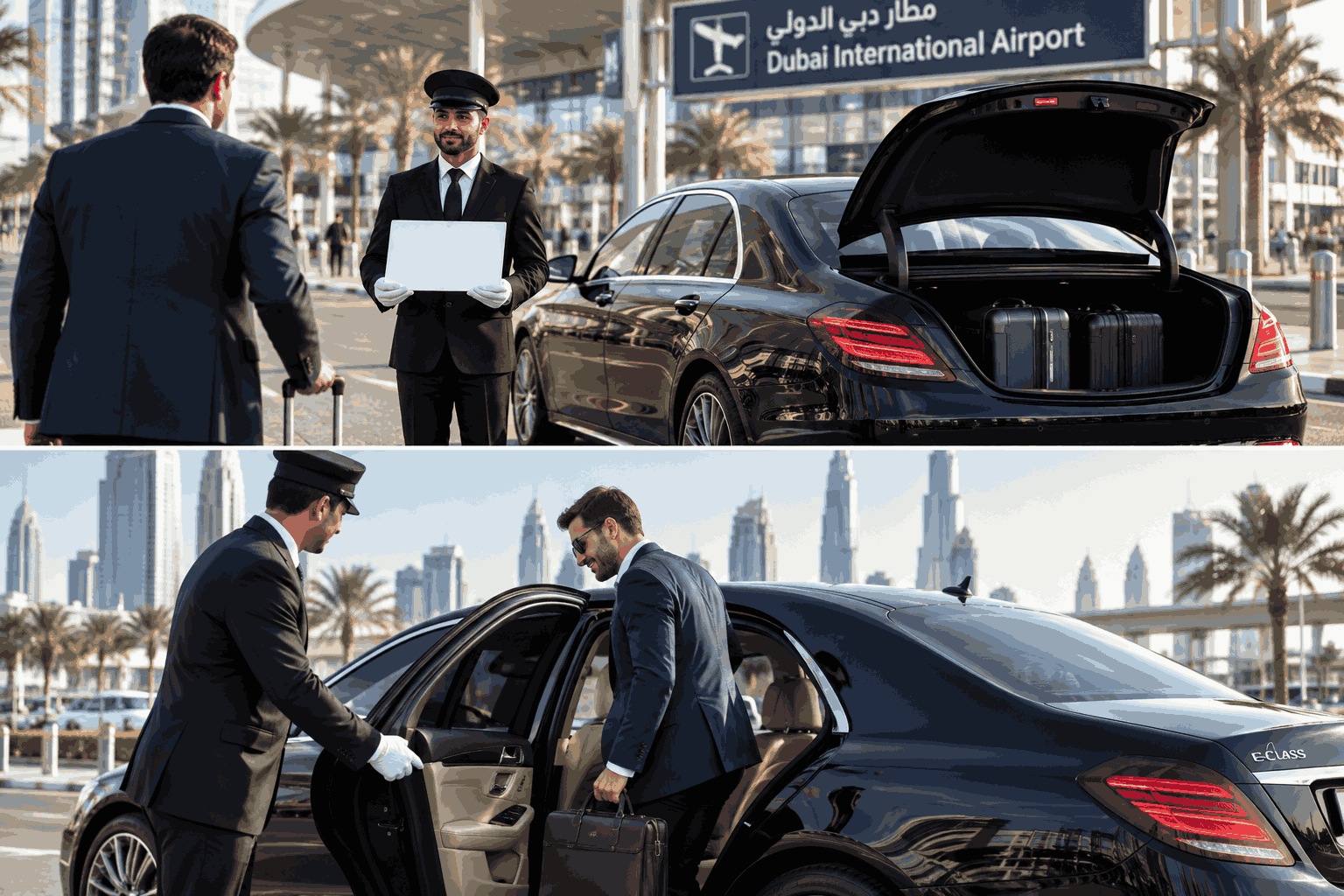
Meet and Greet Service: Chauffeur services at Dubai International Airport include meet and greet with a name board, providing a seamless transition from arrival to departure. The chauffeur assists with luggage collection from the baggage carousel, guides you to the vehicle, and ensures a smooth journey to your destination. This personalised service is particularly valuable during peak periods when airports are crowded and chaotic.
All-Inclusive Pricing: Professional chauffeur services offer transparent, all-inclusive pricing that covers fuel, Salik tolls, and parking fees. This pricing model eliminates the uncertainty of surge pricing and ensures you know exactly what your journey will cost before you travel. During peak seasons when ride-hailing demand surges, this transparency represents a significant advantage.
Professional Expertise: Chauffeurs employed by reputable services hold valid Roads and Transport Authority licenses and undergo professional training. They understand Dubai's road network intimately and can navigate peak traffic conditions efficiently. Their knowledge of the city ensures you reach your destination via the optimal route, avoiding congestion and delays.
Tips for Smooth Airport Transfers with Luggage
- Pre-Book Your Vehicle: During peak seasons, transportation services are in high demand. Pre-booking your vehicle days or weeks in advance ensures availability and allows you to secure the vehicle type best suited to your requirements. Last-minute bookings during busy periods may result in limited options or extended wait times.
- Communicate Your Luggage Needs: When booking your vehicle, provide detailed information about your luggage requirements. Specify the number and size of suitcases, any oversized items, and any special requirements. This information helps the service provider ensure the right vehicle is allocated to your booking.
- Confirm Your Arrival Details: Share your flight number, arrival time, and any potential delays with your service provider. Professional services monitor flight status and adjust pickup times accordingly, ensuring your chauffeur is ready when you arrive regardless of any schedule changes.
- Prepare for Pickup: Upon arrival, ensure your luggage is clearly identifiable to facilitate quick collection. Keep essential documents, valuables, and items needed immediately accessible in your hand luggage, rather than packed in checked bags. This preparation streamlines the baggage collection and transfer process.
Strategic Timing for Peak Season Travel
Choosing Departure Times Wisely
The time of day you choose to travel can significantly impact your peak season experience, affecting everything from airport congestion to luggage handling efficiency.
Early Morning Advantages: Dubai Airports recommends early morning departures, as these flights often experience lighter loads than red-eye services favoured by business travellers. Check-in queues are generally shorter during early morning hours, and baggage handling systems face less pressure than during peak afternoon and evening periods. Travellers with flexible schedules should consider early morning flights to minimise peak season hassles.
Off-Peak Windows: Some airlines offer additional baggage allowances to passengers checking in during specific off-peak windows. These incentives encourage travellers to arrive at the airport during quieter periods, reducing congestion for both passengers and airport operations. Travellers who can adjust their airport arrival times to these windows not only avoid queues but may also benefit from lighter luggage fees.
Avoiding Peak Arrival Times: Airport arrivals often peak in the late afternoon and early evening, coinciding with the influx of European and Asian flights. Arriving earlier or later in the day can significantly reduce the time spent queuing and the stress of navigating crowded terminals.
Considering Alternative Airports
While Dubai International Airport handles the majority of passenger traffic, alternative airports within the UAE offer viable options for travellers seeking less congested experiences.
Abu Dhabi International Airport (AUH): Abu Dhabi's airport has undergone significant expansion in recent years, with increased capacity and improved facilities. During periods when DXB is overwhelmed, Abu Dhabi offers a less congested experience, with shorter queues and more manageable passenger volumes. For travellers whose destinations are in the UAE capital or the western Emirates, AUH may be the more convenient option.
Sharjah International Airport (SHJ): Sharjah Airport serves as a popular alternative for travellers in the northern Emirates. The airport handles both scheduled and charter flights and offers a less frenetic experience than Dubai during peak periods. Sharjah's location makes it convenient for travellers whose destinations are in Sharjah, Ajman, or Ras Al Khaimah.
Connecting Options: For travellers flying through the UAE to other destinations, considering connections via Abu Dhabi or Sharjah can offer advantages over DXB during peak periods. These airports handle significantly less traffic than Dubai, reducing the stress and complexity of connecting flights and luggage transfers.
Building in Buffer Time
During peak travel seasons, building generous buffer time into your travel schedule is essential. This buffer protects against unexpected delays, queues, and transportation issues that can derail carefully planned itineraries.
Airport Arrival Time: Dubai Airports advises arriving at the airport at least three hours before departure for international flights during peak periods. This recommendation should be treated as a minimum; during the busiest weeks, allowing four hours or more provides additional security against unexpected delays.
Transfer and Connection Times: When booking connecting flights, allow significantly more time than the minimum connection period recommended by the airline. Peak season congestion can affect both check-in and baggage transfer processes, and generous connection times provide protection against missed flights.
Transportation Buffer: Allow extra time for journeys to and from the airport during peak seasons, particularly when travelling on Sheikh Zayed Road or other major routes that experience heavy congestion. Professional chauffeur services can provide guidance on expected journey times and optimal routes, helping you plan your schedule accordingly.
Dealing with Excess Luggage at the Airport
Arriving Prepared
The moment you arrive at the airport with more luggage than expected can be stressful, but following a systematic approach can help manage the situation calmly and effectively.
Identify the Issue Early: If you know you are travelling with excess luggage before leaving home, address the issue proactively rather than waiting until you reach the check-in counter. Contact your airline to inquire about additional baggage allowances, consider shipping items, or evaluate alternative packing arrangements.
Have a Plan B: For travellers uncertain about their luggage weight, having a plan B prepared is prudent. Identify which items could be removed or repacked if weight limits are exceeded. Keep a collapsible carry-on bag accessible for items that may need to be transferred from checked to cabin luggage.
Know Your Airline's Policy: Different airlines enforce different baggage policies, and understanding the specific rules for your carrier can prevent surprises. Familiarise yourself with weight limits, size restrictions, and charges for excess baggage before reaching the airport.
Excess Baggage Charges: Understanding the Options
When faced with excess baggage charges, travellers have several options, each with different cost and convenience implications.
Paying Excess Charges: This is the simplest option for dealing with excess luggage, though potentially the most expensive. Peak season charges may be higher than standard rates, so preparing for this possibility is advisable. Payment can usually be made at the check-in counter or through the airline's app.
Purchasing Additional Allowance: Some airlines allow passengers to purchase additional baggage allowance at the airport, potentially at lower rates than excess charges. This option is particularly worthwhile if the excess is moderate and the additional allowance covers your needs.
Shipping Items Separately: For travellers with substantial excess luggage, shipping items separately through freight or postal services may be more economical than paying airline excess charges. This option requires advance planning but can save significantly on costs when transporting large quantities of items.
Abandoning Items: In extreme cases, travellers may choose to abandon items rather than pay excess charges. While not ideal, this option may be preferable for low-value items that are not worth the cost of shipping or excess baggage fees.
Last-Minute Repacking Strategies
If you find yourself needing to reduce luggage weight at the airport, several last-minute strategies can help.
Moving Items to Cabin Luggage: Many airlines allow passengers to carry a cabin bag plus a personal item. If your checked luggage exceeds the weight limit, consider moving heavier items into your cabin luggage. Ensure any items moved comply with cabin baggage restrictions regarding liquids, sharp objects, and batteries.
Distributing Weight: If travelling with companions, redistribute items to better balance weight across multiple bags. This strategy can help avoid individual bags exceeding weight limits while keeping total luggage within permissible allowances.
Wearing More Items: As a last resort, consider wearing additional layers to reduce luggage weight. While not ideal in warm climates or during summer months, this strategy can be effective for reducing weight by a few kilograms when needed.
Family Travel and Special Considerations
Managing Luggage with Children
Travelling with children during peak seasons presents unique luggage challenges that require additional planning and flexibility.
Essential Items Accessibility: When travelling with children, ensuring essential items are easily accessible is crucial. Nappies, changes of clothing, entertainment items, and comfort objects should be packed in easily accessible carry-on luggage rather than checked bags. This ensures items are available throughout the journey, regardless of any luggage delays.
Baby Equipment: Families travelling with infants often need to transport significant baby equipment including prams, car seats, and travel cots. Many airlines allow these items to be checked free of charge as part of the child's allowance, but confirming the specific policy with your airline is essential.
Multiple Suitcases: Larger families require multiple suitcases to accommodate everyone's needs. Using differently coloured luggage tags or distinctive cases helps identify individual bags quickly during baggage collection, reducing stress in crowded arrival halls.
Medical and Special Needs Equipment
Travellers requiring medical equipment or disability aids face additional luggage considerations that require careful advance planning.
Carrying Essential Equipment: Essential medical equipment, mobility aids, and medication should always be carried in cabin luggage rather than checked bags. This ensures the items remain accessible in case of luggage delays and allows for proper handling throughout the journey.
Documentation: Keep prescriptions, medical certificates, and supporting documentation accessible when travelling with medical equipment. This facilitates security screening and provides evidence of the medical necessity of the items you carry.
Pre-notifying Airlines: Informing your airline in advance about medical equipment or disability needs allows the airline to prepare necessary assistance and allocate appropriate cabin space for equipment. This advance notification is particularly important during peak seasons when services are stretched.
The Cost Impact of Luggage Overspill
Financial Implications
The financial costs of inadequate luggage planning extend far beyond excess baggage charges, encompassing a range of expenses that can significantly impact travel budgets.
Excess Baggage Fees: Airlines charge substantial fees for luggage exceeding weight or size limits, with peak season rates often exceeding off-season charges. These fees apply per bag and per journey, meaning travellers on multi-leg trips may face multiple charges.
Storage Costs: During peak seasons, the cost of storing luggage at airports, hotels, or independent facilities commands premium rates. Travellers requiring storage for extended periods may face substantial expenses, particularly if forced to use higher-priced airport facilities.
Emergency Purchases: When luggage is delayed or lost, travellers must make emergency purchases of essential items, paying premium prices at airport shops or hotel boutiques. These emergency purchases can quickly add to travel costs, particularly for business travellers requiring appropriate professional attire.
Opportunity Costs: The time spent managing luggage issues—queuing at storage facilities, dealing with excess charges, and navigating crowded areas with multiple bags—represents time that could have been spent productively or enjoyably. For business travellers, this lost time has direct financial implications.
Value Considerations
When evaluating luggage management options, considering value rather than just price is important. The cheapest option may not represent the best value if it adds stress, creates inconvenience, or leads to other costs.
Investment in Quality Luggage: Investing in quality, lightweight luggage can pay dividends over time, allowing travellers to carry more items without exceeding weight limits. High-quality suitcases with well-designed interiors also facilitate more efficient packing.
Early Planning Savings: The savings from early planning are substantial across all aspects of luggage management. Pre-booking excess baggage, arranging storage in advance, and booking transport ahead of time all command lower rates than last-minute arrangements.
Peace of Mind: The value of a stress-free travel experience should not be underestimated. Knowing that luggage arrangements are secure, transport is confirmed, and contingencies are in place allows travellers to focus on their purpose for travelling rather than logistical concerns.
Post-Trip Luggage Management
Handling Returns
As the travel experience concludes, luggage management remains a consideration even after checking in for the return journey.
Shopping Considerations: The UAE's status as a shopping destination means many travellers return with significantly more luggage than they arrived with. Purchases of gold, textiles, electronics, and souvenirs all require careful luggage management at journey's end.
Gift and Souvenir Consolidation: Consolidating purchased items into efficient packing configurations before heading to the airport maximises luggage capacity. Removing packaging where appropriate and repacking items can significantly improve space utilisation.
Shipping Purchases: For substantial purchases, consider shipping items directly rather than attempting to carry them home. Shipping services in the UAE offer competitive rates, and having items delivered to your home address eliminates the need to transport them on the journey.
Reflecting and Learning
Every journey provides lessons that can improve future luggage management. Reflecting on what worked and what could be improved makes subsequent peak season travel more manageable.
Packing Assessment: After returning home, assess what was packed but not used. This provides valuable insights for future packing decisions, allowing you to adjust your packing strategy and reduce unnecessary weight.
Luggage Condition Assessment: Evaluate the condition of your luggage following the journey. Zips, wheels, handles, and other components may have experienced wear that requires attention. Addressing minor issues promptly prevents more significant problems on future journeys.
Supplier Evaluation: Consider how well your transport provider, storage service, and other luggage-related suppliers performed. This evaluation informs future booking decisions and helps identify which services represent the best value for your specific needs.
Frequently Asked Questions (FAQs)
Q1: When is peak travel season in the UAE and how does it affect luggage management?
Peak travel season in the UAE runs from November through April, with additional surges during school holidays, Eid al-Adha, and summer months. During these periods, airports experience extreme congestion, baggage handling systems operate at full capacity, and luggage storage facilities see high demand. Travellers should expect longer queues, potential delays in baggage delivery, and higher prices for storage and excess baggage services. Planning ahead and booking services in advance is essential to avoid difficulties.
Q2: How can I avoid excess baggage charges during peak travel months?
Excess baggage charges can be avoided through several strategies. Pre-booking additional baggage allowance online is the most cost-effective approach. Use a luggage scale to weigh bags at home before departure and adjust packing as needed. Consider wearing heavier items on the flight to reduce checked luggage weight. Use rolling techniques to pack more efficiently and maximise space. For larger families, distributing weight across multiple suitcases can prevent individual bags from exceeding limits. If travelling with shopping purchases, consider shipping items home rather than carrying them.
Q3: What are the most reliable luggage storage options in Dubai during peak season?
Dubai offers several reliable luggage storage options suitable for different needs. Hotel luggage storage is the most cost-effective for guests, offering complimentary storage on check-in and check-out days. Independent luggage storage services through digital platforms offer flexibility with multiple convenient locations and competitive peak season pricing. Self-storage facilities provide economical solutions for extended storage needs, with climate-controlled options essential for protecting sensitive items. Airport luggage storage at DXB Terminals 1 and 3 is convenient but commands premium rates and may have limited capacity during busy periods.
Q4: How early should I arrive at Dubai International Airport during peak travel months?
Dubai Airports advises arriving at least three hours before departure for international flights during peak periods. During the busiest weeks, allowing four hours or more provides additional security against unexpected delays. For early morning departures, queues are generally shorter, and baggage handling systems face less pressure. Travellers should consider off-peak check-in windows offered by some airlines, which may include additional baggage allowances and shorter queues.
Q5: Can I store my luggage at Dubai airport for several days during a long layover?
Yes, Dubai International Airport offers luggage storage services at Terminals 1 and 3 that can accommodate bags for up to several days. However, storage duration is typically limited, and capacity may be constrained during peak periods. For longer storage requirements, independent storage services or self-storage facilities offer more flexible terms and potentially lower costs. When storing luggage at the airport, confirm the maximum storage duration and any restrictions on permitted items.
Q6: What vehicle type is best for airport transfers with a lot of luggage in Dubai?
For travellers with significant luggage, full-size SUVs such as the GMC Yukon, Chevrolet Suburban, and Cadillac Escalade offer generous cargo capacity and comfortable passenger accommodation. The extended-wheelbase variants provide even greater luggage space. For larger groups, people carriers and vans such as the Citroën SpaceTourer offer additional capacity. When booking transport, discuss your specific luggage requirements with the service provider to ensure the allocated vehicle can accommodate all passengers and bags comfortably.
Q7: What items are not permitted in airport luggage storage facilities?
Airport luggage storage facilities typically prohibit storing perishable items, dangerous goods, flammable materials, firearms, ammunition, explosives, and fragile items. Valuables, cash, jewellery, and important documents should not be stored in luggage storage, as facilities may disclaim liability for these items. Each facility has specific prohibited items listed in their terms and conditions, so reviewing these before using the service is essential.
Q8: How much does luggage storage cost in Dubai during peak season?
Luggage storage costs in Dubai vary significantly based on location, duration, and service type. Airport storage at DXB can cost between 50 and 90 dirhams per day during peak periods. Independent storage services typically range from 35 to 55 dirhams per day, with discounts for longer durations. Hotel luggage storage is usually complimentary for guests. Self-storage units for luggage-sized requirements cost approximately 200 to 500 dirhams per month, offering the most economical option for extended storage needs.
Q9: What alternative airports can I use to avoid peak season congestion at DXB?
Abu Dhabi International Airport (AUH) and Sharjah International Airport (SHJ) offer viable alternatives to Dubai International Airport during peak periods. These airports handle significantly less traffic, with shorter queues and more manageable passenger volumes. For travellers whose destinations are in the western Emirates, Abu Dhabi may be the more convenient option, while Sharjah serves travellers in the northern Emirates. For connecting passengers, considering flights via these airports may reduce the stress and complexity of peak season travel.
Q10: Are there any luggage delivery services in Dubai that can transport bags to my hotel?
Yes, several luggage delivery services operate in Dubai, offering door-to-door transport of bags from the airport to hotels and other destinations. These services collect your luggage from the airport baggage hall or a designated meeting point and deliver it directly to your accommodation. This service is particularly valuable for travellers who wish to begin exploring immediately upon arrival or are attending meetings without the burden of luggage. Services typically include luggage tracking, insurance, and flexible delivery scheduling.
Q11: How do I handle luggage overspill when travelling with children during peak season?
Travelling with children requires additional luggage management attention. Pack essential items in easily accessible carry-on luggage for use throughout the journey. Consider using multiple smaller suitcases rather than one large bag to distribute weight and make handling easier. Check baby equipment such as prams and car seats as part of the child's baggage allowance where possible. Use distinctive luggage tags to identify family bags quickly in crowded arrival halls. Prepare children for potential delays and maintain essential entertainment and comfort items in hand luggage.
Q12: What insurance options cover lost or delayed luggage during peak season?
Travel insurance policies typically include coverage for lost, damaged, or delayed luggage, but the specific terms and limits vary significantly between providers. Policies may cover emergency purchases if luggage is delayed beyond a specified period, typically 24 to 48 hours. For valuables, higher coverage limits may be available through specialised policies or by specifying items individually. Carefully reviewing your policy's terms before travelling ensures you understand what is covered and the claims process. Keep receipts for any emergency purchases to support potential claims.
Q13: Can I store sports equipment like golf clubs or skis in Dubai during a visit?
Yes, sports equipment can be stored in Dubai through various storage options. Self-storage facilities accept sports equipment in climate-controlled units, protecting sensitive items such as golf clubs and skis from heat and humidity. Independent luggage storage services often accommodate sports equipment, though may charge additional fees for oversized items. Hotels may offer limited storage for sports equipment on request. When storing valuable sports equipment, confirming insurance coverage and security arrangements is advisable.
Q14: What should I do if my luggage is lost or delayed during peak travel months?
If your luggage is lost or delayed, report the issue to your airline's baggage services desk before leaving the airport. Complete a Property Irregularity Report (PIR) and obtain a reference number for tracking purposes. Keep all receipts for essential purchases made while waiting for luggage to arrive. Contact your travel insurance provider to initiate a claim and confirm what expenses are covered. Most airlines provide updates on luggage status through their websites or mobile applications, allowing you to track progress without repeated calls to customer service. Maintain regular communication with your airline until the luggage is located or a settlement is reached.
Q15: How can I transport large shopping purchases from Dubai to my home country?
Shipping purchases home is often more economical and convenient than carrying them as luggage. Courier services, freight forwarders, and postal services all offer shipping options from Dubai to international destinations. For substantial purchases, dedicated freight services may provide the most competitive rates. When shipping, ensure items are properly packed and insured against damage or loss. For purchases eligible for VAT refund, complete the necessary documentation before shipping to claim your refund.
Q16: Are there any apps or tools that help with luggage management during travel?
Several mobile applications and digital tools assist with luggage management. Airlines' mobile apps allow baggage tracking, weight checking, and excess baggage pre-booking. Digital luggage scales with Bluetooth connectivity sync with mobile applications to display precise weight measurements. Storage service platforms allow real-time booking and payment for luggage storage at partner locations. Bag tracking devices, such as Bluetooth or GPS trackers, can be inserted into luggage to monitor location and provide peace of mind. Many of these tools offer significant benefits during peak travel periods.
Q17: What is the capacity of the GMC Yukon for luggage during airport transfers?
The GMC Yukon offers generous cargo space behind the third row, accommodating several suitcases comfortably. With the third row folded, capacity increases significantly, allowing for larger luggage volumes. The extended-wheelbase Yukon XL variant provides even greater cargo space, making it one of the most spacious SUVs for airport transfers. For groups of up to eight passengers with luggage, the standard Yukon typically accommodates all items comfortably. For larger groups or exceptional luggage volumes, discussing requirements with the service provider is recommended.
Q18: How can corporate travellers manage luggage effectively during peak business travel seasons?
Corporate travellers should pre-book transportation services with sufficient luggage capacity for themselves and any colleagues. Sharing larger vehicles such as full-size SUVs can be more cost-effective and efficient than multiple cars. Use hotel luggage storage for early arrivals and late departures. Consider shipping business materials and promotional items to destinations rather than carrying them as luggage. Join airline loyalty programmes that offer additional baggage allowances and priority handling services. Schedule meetings and appointments with realistic timing allowances to accommodate potential delays during peak season.
Q19: What are the luggage weight limits for major airlines operating in Dubai?
Luggage weight limits vary between airlines, routes, and fare classes. Economy class baggage allowances typically range from 20 to 30 kilograms per checked bag, with business and first class allowances significantly higher. Many airlines operating in Dubai also offer weight-based allowances where the total weight across multiple bags is limited rather than the weight per bag. Always check your specific airline's policies before travelling, as weight limits are strictly enforced and excess charges apply for any luggage exceeding the allowance.
Q20: What is the best way to pack valuable items when travelling during peak season?
Valuables including jewellery, electronics, important documents, and cash should always be carried in cabin luggage rather than checked bags. Use padded, secure carrying cases for fragile valuables. Consider travel insurance that covers valuables both in transit and at your destination. When storing valuables during your stay, use hotel safety deposit boxes or other secure facilities rather than leaving items in luggage. Keep an itemised inventory of valuables with photographs as supporting documentation for insurance purposes. During peak periods when luggage handling volumes are high, careful protection of valuables is particularly important.
Conclusion
Managing luggage overspill during peak travel months in the UAE requires a combination of advance planning, strategic decision-making, and understanding the available services and solutions. The challenges of peak season travel—crowded airports, overwhelmed baggage systems, limited storage availability, and increased costs—are significant but by no means insurmountable.
The foundation of effective luggage management is preparation. Smart packing, weighing bags before departure, pre-booking excess baggage allowances, and understanding your transport requirements before arrival prevent many issues from arising. When luggage overspill does occur, the UAE offers a sophisticated network of solutions from hotel storage and independent services to self-storage facilities and professional chauffeur transport.
Choosing the right transportation for your needs during peak seasons is particularly important, with full-size SUVs and professional chauffeur services offering the capacity and reliability required to manage significant luggage volumes. Services that include meet and greet, assistance with baggage, and all-inclusive pricing provide particular value during the busiest periods.
The financial impact of inadequate luggage planning can be substantial, with excess baggage fees, premium storage costs, and emergency purchases all adding to travel expenses. However, the costs of inconvenience, stress, and lost time are equally significant, particularly for business travellers and families with demanding schedules.
By applying the strategies outlined in this guide—advance planning, appropriate vehicle selection, strategic timing, and knowledgeable use of storage services—travellers can navigate even the busiest peak seasons with confidence and ease. The memories that matter most are those of the destination, the experiences, and the connections made along the way, not the stress of managing luggage.
For those who find themselves travelling with more luggage than anticipated, the UAE's comprehensive range of services provides flexible solutions for every duration and budget. From a few hours of storage to extended arrangements, from personal luggage to business materials, the services available ensure that luggage management need never compromise the quality of your travel experience.
By taking control of luggage management before reaching the airport and choosing service providers that understand the unique challenges of peak season travel, visitors to the UAE can focus on enjoying everything this remarkable destination has to offer. The Dubai experience—the towering architecture, the world-class hospitality, the vibrant culture, and the unforgettable memories—awaits, unburdened by the weight of luggage anxiety.
Disclaimer: This guide provides general information about luggage management during peak travel periods in the UAE. Specific services, prices, and policies may vary by provider and season.