When an international delegation visits Dubai, the transport arrangements carry weight beyond simple logistics. A delegation—whether governmental, diplomatic, corporate, or institutional—travels with a purpose, a protocol, and a set of expectations. Its members are guests of the emirate, and their impressions are shaped by how they are received. The vehicles that meet them at the airport, the punctuality of the convoys, the professionalism of the drivers, and the ability to adapt to changes in an official programme all contribute to the success of the visit.
This article examines how to manage chauffeur transport for international delegations in Dubai. It focuses on the specific demands of delegation travel: protocol requirements, airport arrivals, multi-vehicle coordination, communication across languages and time zones, and the fluid nature of official meeting schedules. It is written for protocol officers, corporate event teams, government liaison staff, and anyone responsible for moving a visiting delegation through the city.
The Nature of Delegation Travel
A delegation is not simply a group of people travelling together. It has structure, hierarchy, and purpose.
Hierarchy matters. A delegation typically includes a head of delegation—a minister, an ambassador, a CEO, or a senior official—along with senior advisers, technical staff, and support personnel. Transport arrangements must reflect this hierarchy, with the head of delegation receiving a level of service appropriate to their position.
Protocol governs. Diplomatic and governmental delegations operate within protocols that determine who is met by whom, which vehicles are used, and the order of arrival. These protocols are not optional; they are part of the visit’s framework.
The programme is dense. Delegations often visit for a short period—two or three days—with a packed schedule of official meetings, site visits, receptions, and cultural engagements. Every movement must be efficient.
Security considerations apply. Depending on the delegation’s profile, security arrangements may be involved, including coordination with local authorities, security details, and route planning.
Communication is multilingual. Delegations may include members who speak different languages, requiring coordination with interpreters and liaison officers
Understanding the Delegation’s Requirements
Before any vehicle is booked, the transport coordinator must understand the delegation’s composition and programme.
Gather Delegation Details
Compile a clear picture of the delegation:
- Head of delegation and their title
- Number of delegates and their roles
- Languages spoken
- Arrival and departure flights
- Hotel arrangements
- The official programme, including meetings, visits, and receptions
- Any security or protocol requirements
This information forms the basis of the transport plan.
Identify the Protocol Requirements
Protocol requirements vary depending on the delegation’s nature. A governmental delegation may require official vehicles, formal driver presentation, and specific arrival protocols. A corporate delegation may prioritise discretion and efficiency. A cultural delegation may require flexibility.
Confirm the protocol requirements with the relevant authority—the embassy, the ministry, the host organisation—before finalising arrangements.
Identify the Transport Coordinator
Designate a single point of contact for transport coordination. This person liaises with the chauffeur service in Dubai, the delegation’s liaison officer, and the host organisation. They are responsible for communicating changes, confirming schedules, and resolving issues.
Airport Arrivals: The First Impression
The airport arrival is the delegation’s first experience of Dubai, and it sets the tone for the visit.
Confirm the Arrival Details
Confirm the flight numbers, arrival times, terminals, and the number of passengers and bags. For large delegations, arrivals may be spread across multiple flights.
Arrange Meet-and-Greet
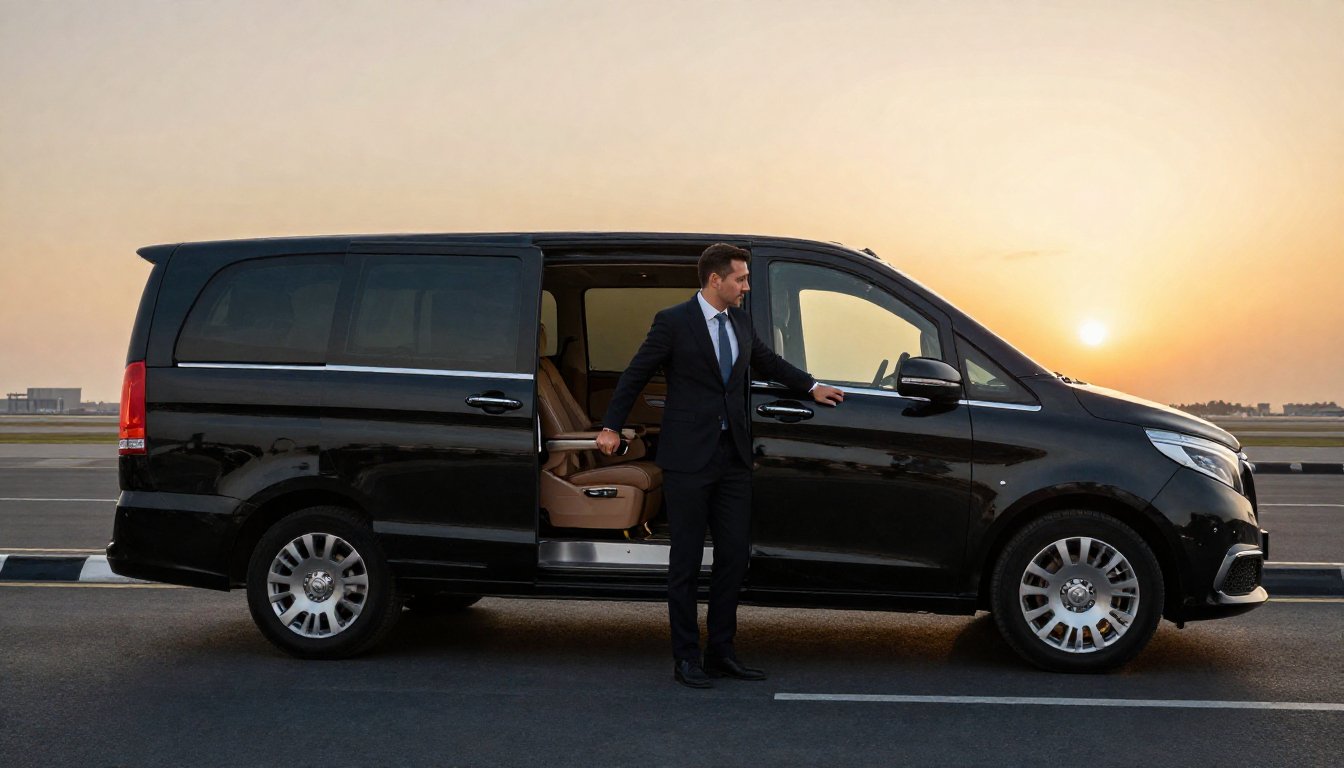
For official delegations, a meet-and-greet service is standard. The chauffeur, or a representative of the host, meets the delegation at the arrivals gate, assists with luggage, and escorts them to the vehicles. For airport pickup arrangements, review the available airport transfer service in Dubai and confirm the specific requirements in advance.
Coordinate with Airport Authorities
For high-level delegations, airport authorities may provide expedited processing, dedicated lounges, or separate arrival channels. Confirm these arrangements in advance and ensure that the chauffeur service is aware of the procedures.
Allocate Vehicles by Hierarchy
The head of delegation should be allocated a dedicated vehicle, typically a luxury sedan. Senior advisers may travel in a separate vehicle. Support staff may travel in an SUV or van. The allocation should reflect the delegation’s hierarchy and protocol requirements. Reviewing the available chauffeur fleet helps the coordinator match vehicles to the delegation’s needs.
Manage Luggage
Delegations travel with luggage: suitcases, document cases, gifts, and sometimes equipment. Confirm the volume and allocate vehicles accordingly. For large delegations, a separate luggage vehicle may be required.
Stagger Arrivals
If the delegation arrives on multiple flights, stagger the pickups. Each arrival should be met individually, with the vehicles returning to the airport as needed.
Multi-Vehicle Coordination
Large delegations require multiple vehicles, and coordinating them is the central challenge.
Fleet Composition
A typical delegation fleet might include:
- One or more luxury sedans for the head of delegation and senior officials
- SUVs for advisers and staff
- A van or minibus for support personnel and luggage
- A follow vehicle for security, if required
The composition depends on the delegation’s size and protocol requirements. For larger groups requiring higher passenger capacity, bus rental in Dubai may also be worth considering.
Convoy Protocol
For official visits, vehicles may travel in convoy, with a designated order. The head of delegation’s vehicle typically leads, followed by other vehicles in order of hierarchy. Convoy protocol may be determined by the host organisation or security authorities.
Communication Between Vehicles
Effective communication between vehicles is essential. Drivers should have a shared communication channel—typically a messaging group or radio—to coordinate movements, report delays, and adjust routes.
Designated Convoy Leader
One driver should be designated as the convoy leader, responsible for setting the pace, choosing routes, and communicating with the transport coordinator.
Parking and Waiting
During meetings, vehicles may need to wait. For convoys, waiting areas should be arranged in advance, with vehicles positioned to depart quickly when required.
Communication and Language
Delegations may include members who do not speak Arabic or English fluently, and communication is a key consideration.
Work with Liaison Officers
Most delegations include a liaison officer or protocol officer who manages communication with the host. This person is the primary contact for transport coordination.
Interpreters
For delegations requiring interpretation, interpreters may travel with the delegation. If interpreters need transport, they should be accommodated in the fleet.
Multilingual Chauffeurs
Where possible, chauffeurs who speak the delegation’s language should be assigned. This is not always possible, but it eases communication and enhances the experience. You can review information about available languages and chauffeur services in the company’s frequently asked questions.
Written Briefs
Written briefs, in the delegation’s language where possible, help ensure that drivers and delegation members understand the schedule and requirements.
Simple Communication Protocols
For moments when language is a barrier, simple protocols—clear pickup times, designated meeting points, and mobile contact numbers—help avoid confusion.
Managing the Official Programme
Official programmes are dense and subject to change. Transport must be flexible.
Confirm the Programme in Advance
Obtain the official programme as early as possible, including meeting times, venues, and attendees. This allows the transport plan to be built around it.
Identify Fixed and Flexible Elements
Some elements of the programme are fixed: a meeting with a minister, a signing ceremony, a reception hosted by an ambassador. Others may be flexible. Distinguishing between the two helps with planning.
Build in Buffer Time
Official programmes rarely run exactly to schedule. Meetings overrun, courtesy calls extend, and impromptu discussions occur. Build buffer time between engagements.
Plan for Changes
Changes to the programme are common. The transport coordinator should be able to adjust vehicle allocations, routes, and schedules at short notice.
Confirm the End of Each Engagement
Confirm with the delegation’s liaison officer when each engagement concludes, so vehicles can be repositioned promptly.
Security Considerations
Depending on the delegation’s profile, security may be a significant factor.
Coordinate with Authorities
For high-level delegations, security arrangements may involve local authorities. The transport coordinator should liaise with the relevant security officials to ensure that vehicle movements are coordinated.
Route Planning
Routes may need to be planned in advance, with alternatives identified. Security details may require specific routes or timing.
Vehicle Security
Vehicles may need to be checked, and drivers vetted. Confirm any security requirements with the relevant authorities.
Discretion
For sensitive visits, discretion is essential. Drivers should be briefed on confidentiality and should avoid discussing the delegation or its movements.
Hotel and Accommodation Logistics
Delegations often stay at a single hotel, but may be spread across several properties.
Confirm the Hotel Arrangements
Confirm which delegates are staying at which hotels. If the delegation is spread across multiple properties, the transport plan must account for multiple pickup points.
Daily Departures
For each day, confirm the departure times from the hotel and the return times. Build in time for the delegation to assemble.
Hotel Coordination
Liaise with the hotel concierge to arrange vehicle staging, pickup points, and luggage handling.
Receptions and Evening Events
Official visits often include receptions, dinners, and cultural events.
Plan the Evening Transport
Confirm the venue, timing, and attendee list for each evening event. Allocate vehicles accordingly.
Return Arrangements
Confirm the return arrangements for each event. Some delegates may wish to return early; others may stay late. Vehicles should be available to accommodate this.
Dress and Protocol
For formal events, the chauffeur’s presentation and the vehicles’ cleanliness should reflect the occasion.
Cost Considerations
Delegation transport is typically booked as a multi-day, multi-vehicle engagement.
Full-day and multi-day packages. Vehicles are typically booked for full days across the duration of the visit, with waiting time included.
Multiple vehicles. The cost increases with the number of vehicles. Providers may offer discounted rates for multi-vehicle bookings.
Luxury vehicles. Luxury sedans and SUVs command premium rates. For official delegations, these are often required.
What is included. Reputable providers include the chauffeur, vehicle, fuel, tolls within Dubai, parking, and insurance.
Additional charges. Overtime, inter-emirate travel, and additional services may be charged separately
A Delegation Transport Checklist
Before the visit, confirm the following:
- Delegation composition, hierarchy, and languages
- Protocol requirements
- Arrival and departure flights
- Hotel arrangements
- Official programme
- Vehicle allocation by hierarchy
- Convoy protocol, if applicable
- Communication arrangements
- Security requirements
- Liaison officer contact details
- Contingency arrangements
Conclusion: Transport as a Diplomatic Instrument
For an international delegation, transport is not simply a means of getting from one meeting to the next. It is an expression of the host’s respect, organisation, and attention to detail. A well-managed transport operation reflects positively on the host and on Dubai. A poorly managed one creates friction, delays, and a poor impression.
Managing chauffeur transport for a delegation requires planning, coordination, and flexibility. It requires understanding protocol, coordinating multiple vehicles, communicating across languages, and adapting to changes in the programme. Done well, it allows the delegation to focus on the purpose of its visit, confident that the logistics are in capable hands.
For host organisations and protocol teams in Dubai, a professional chauffeur service is part of the welcome. It deserves the same care as every other element of the visit.
Frequently Asked Questions (FAQs)
Q1: What is involved in managing transport for an international delegation?
It involves understanding the delegation’s composition and protocol requirements, arranging airport arrivals, coordinating multiple vehicles, communicating with liaison officers, planning around the official programme, and handling security considerations.
Q2: How many vehicles does a delegation need?
It depends on the delegation’s size and hierarchy. A typical fleet includes luxury sedans for senior officials, SUVs for advisers, and a van for support staff and luggage. You can compare vehicle options in the available chauffeur fleet.
Q3: Do delegations require convoy travel?
For official visits, convoys may be required, with vehicles travelling in a designated order. Confirm the protocol with the relevant authority.
Q4: How do I coordinate communication across languages?
Work with the delegation’s liaison officer or protocol officer, use interpreters where necessary, assign multilingual chauffeurs where possible, and use written briefs and simple communication protocols.
Q5: How do I handle changes to the official programme?
Build buffer time into the schedule, maintain contact with the liaison officer, and ensure the transport coordinator can adjust vehicle allocations and routes at short notice.
Q6: What security arrangements are needed for a delegation?
Security arrangements depend on the delegation’s profile. For high-level visits, coordinate with local authorities, plan routes in advance, and ensure vehicles and drivers meet any security requirements.
Q7: How far in advance should I book transport for a delegation?
Book as early as possible, ideally several weeks in advance. Multi-vehicle, multi-day bookings require coordination, and luxury vehicles are in demand.
Q8: Can chauffeurs assist with airport meet-and-greet for delegations?
Yes. Chauffeurs can meet the delegation at arrivals, assist with luggage, and escort them to the vehicles. For high-level visits, coordinate with airport authorities for expedited processing. You can review the available airport transfer service in Dubai when arranging airport pickups.
Q9: How do I handle luggage for a large delegation?
Confirm the volume of luggage in advance and allocate vehicles accordingly. For large delegations, a separate luggage vehicle may be required. A van or minibus may be suitable for support staff and luggage, depending on capacity.
Q10: What happens if a delegation member needs to leave an event early?
Vehicles should be available to accommodate early departures without disrupting the rest of the convoy. Confirm the return arrangements for each event in advance.