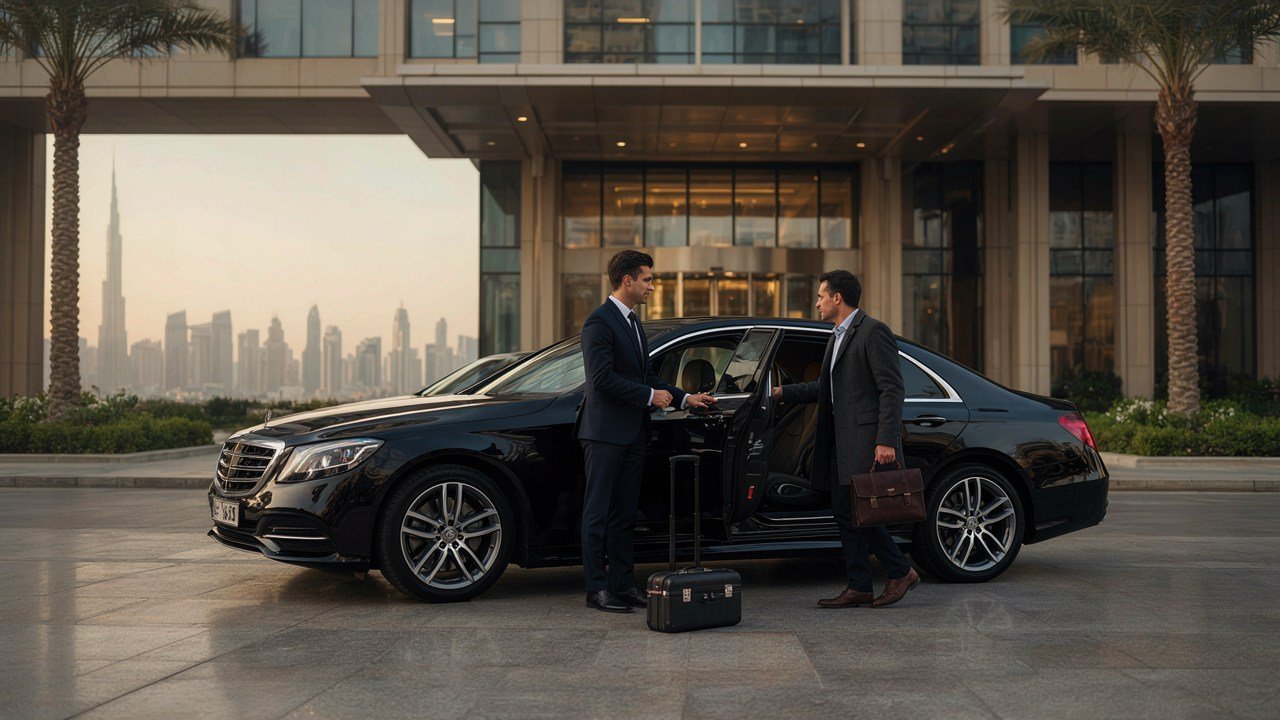
Imagine the scene. You are hosting a wedding, a corporate retreat, a family reunion, or a milestone celebration in Dubai. Guests are flying in from several countries, arriving on different days, and staying at hotels scattered across the city—some in Downtown, some at the Marina, others on the Palm or near the airport. The event itself is fixed: a ceremony, a dinner, a conference, a dinner cruise. The only variable is how everyone gets there, and how they get back. Get it right, and the guests barely notice the logistics. Get it wrong, and the phones start ringing, the group chats fill with complaints, and the event begins with half the guests arriving late and the other half unsure where to go.
Arranging chauffeur transport for guests spread across multiple Dubai hotels is one of the more demanding logistical exercises in event planning. It involves different pickup points, different arrival times, different group sizes, and different needs. It requires coordination between hotels, drivers, guests, and organisers. And it demands a system robust enough to handle the inevitable changes—a delayed flight, a guest who decides to skip the event, a dinner that runs long.
This guide walks through how to arrange it properly. It is structured around the practical sequence an organiser actually follows: understanding the guest profile, choosing a transport model, gathering information, building a schedule, briefing drivers, communicating with guests, managing the event day, and handling the return. Each stage builds on the last.
Start with the Guest Profile, Not the Vehicles
Most transport planning fails at the very beginning because it starts with vehicles. The correct starting point is the guest list.
Before you can decide how many cars you need or what time the first pickup should be, you need to understand who your guests are and how they are distributed.
Build a Guest Matrix
Create a simple table with one row per guest or per booking party. Include:
- Guest name or party name
- Number of people in the party
- Hotel name and address
- Arrival date and time, if relevant
- Which events they are attending
- Any special requirements—mobility needs, children, elderly guests
- Contact number or preferred messaging channel
This matrix becomes the foundation of everything that follows. Every pickup, every vehicle, and every schedule is derived from it.
Identify Clusters
Once the matrix is complete, look for clusters. Guests staying at the same hotel, or at hotels within a short distance of each other, can often be grouped into a single vehicle. A party of two at one hotel and a party of three at a hotel five minutes away can usually travel together.
Clustering reduces the number of vehicles required, which reduces cost and complexity. It also reduces the number of pickup points, which makes the schedule easier to manage.
Note the Outliers
Some guests will not fit neatly into clusters. A single guest at a hotel far from everyone else. A family with young children who need extra time. A VIP who expects a private car. Identify these early so you can plan for them separately rather than trying to force them into a group arrangement.
Choose a Transport Model That Fits the Event
There is no single correct way to move guests between multiple hotels and an event venue. The right model depends on the size of the guest list, the number of hotels, the nature of the event, and the budget.
The Shuttle Model
In this model, a small number of larger vehicles—vans or minibuses—run a loop between the hotels and the venue on a fixed schedule. Guests gather at a designated pickup point at their hotel and board the shuttle at a set time.
Best for: Larger guest lists with several hotels in close proximity, events with a relaxed arrival window, and situations where cost efficiency matters more than individual flexibility.
Watch out for: Guests who miss the shuttle. If the shuttle leaves at 6:00 PM and a guest arrives in the lobby at 6:05 PM, they need a fallback. Always plan a contingency for latecomers.
The Dedicated Vehicle Model
In this model, each hotel or cluster of hotels is assigned its own vehicle and chauffeur. The vehicle collects guests from that hotel and delivers them to the venue, then remains available or returns at an agreed time.
Best for: Mid-sized guest lists, events where punctual arrival matters, and groups that want a degree of privacy and comfort.
Watch out for: Underfilled vehicles. If a vehicle is assigned to a hotel with only two guests, and another hotel nearby has three, you may be able to combine them. Review your clusters carefully before committing.
The Individual Transfer Model
In this model, each guest or party is assigned a separate transfer. This is the most flexible and the most expensive option.
Best for: VIP guests, small guest lists, and situations where privacy or individual scheduling is essential.
Watch out for: Coordination overload. With many individual transfers, the organiser must track each one separately. This only works if you have a robust communication system in place.
The Hybrid Model
Most real events use a hybrid. VIPs and speakers get individual transfers; larger groups use shuttles; clusters share dedicated vehicles. This approach balances cost, convenience, and flexibility.
Best for: Most events with a mix of guest types.
Gather the Information You Actually Need
Once you have chosen a model, you need detailed information from every guest. Vague details cause problems on the day.
What to Collect from Each Guest
- Exact hotel name and address—not just “Marina” or “Downtown”
- Room number or a mobile contact, so the driver can reach them
- Number of people travelling together
- Preferred pickup time, if the guest has one
- Any mobility requirements or need for child seats
- Whether they will return with the group or independently
What to Confirm with Each Hotel
- The exact pickup point. Large hotels often have multiple entrances—the main lobby, a side entrance, a valet area. Specify which one.
- Whether vehicles can wait at the entrance or must circulate
- Whether the hotel requires advance notice of vehicle arrivals
- Any access restrictions for larger vehicles
What to Confirm with the Venue
- The exact drop-off point. Large venues, especially in Dubai, may have multiple entrances serving different halls or functions.
- Whether there is a designated group arrival area
- Whether vehicles can wait on site or must leave and return
- The return pickup point, which may differ from the drop-off
Getting these details right in advance prevents the most common causes of delay.
Build the Schedule Backwards from the Event
The schedule should be built backwards from the moment guests need to be at the venue, not forwards from when the vehicles are available.
Step One: Fix the Arrival Deadline
If the event begins at 7:00 PM, guests should be at the venue by 6:45 PM at the latest. For a formal dinner or ceremony, allow extra time for welcome drinks, seating, and photographs.
Step Two: Add the Walk and Buffer
From the drop-off point, guests may need to walk to the function space. At a large hotel or venue, this can take five to ten minutes. Add this to the arrival deadline.
Step Three: Calculate Journey Time
Journey time varies by route and time of day. A trip from the Marina to Downtown can take twenty-five minutes in light traffic or fifty minutes during peak hours. Use realistic estimates, not optimistic ones.
Step Four: Add a Traffic Buffer
Dubai traffic is unpredictable. Add fifteen to thirty minutes to every journey, more during peak periods or around major events.
Step Five: Work Out the Pickup Time
Subtract the total journey time, buffer, walk, and pre-arrival allowance from the arrival deadline. The result is the pickup time for that vehicle.
Step Six: Stagger the Pickups
If multiple vehicles are departing from different hotels, stagger their departure times so they arrive at the venue within a reasonable window rather than all at once. This avoids congestion at the drop-off point and reduces waiting.
Brief the Drivers Properly
A well-briefed driver is the difference between a smooth transfer and a confused one. Every driver should receive a written brief covering the following.
The Guest List for That Vehicle
Names, number of guests, and a contact number for at least one person in the group. If the driver cannot reach the guests, they cannot collect them.
The Pickup Point
The exact hotel, the exact entrance, and any specific instructions—for example, “wait at the main lobby entrance, not the valet area.”
The Pickup Time
The agreed time, with a note of how long the driver should wait if guests are delayed.
The Drop-Off Point
The exact venue entrance and any access instructions.
The Return Plan
Whether the driver is waiting, returning at a set time, or on call. If on call, the number to reach and the expected procedure.
The Contingency
What to do if guests do not appear, if the vehicle is delayed, or if the plan changes. Who to call, and what the fallback is.
Give every driver the organiser’s contact number and ensure the organiser has every driver’s number.
Communicate Clearly with Guests
Guests cannot follow a plan they do not know about. Communication should be simple, repeated, and delivered through the channels guests actually use.
What Guests Need to Know
- The pickup time for their hotel
- The exact pickup point
- The name or description of the vehicle and driver
- The driver’s contact number, or the organiser’s
- The expected arrival time at the venue
- The return arrangement
When to Communicate
Send the details at least twenty-four hours before the event, and again on the day as a reminder. If the schedule changes, communicate immediately.
How to Communicate
Use the channel guests are most likely to check. For international guests, WhatsApp is usually the most reliable. A printed card in the hotel room also works well for formal events.
Designate a Point of Contact
Guests should know who to contact if something goes wrong. Ideally, this is a single person—the organiser or a designated coordinator—not a rotating cast of assistants.
Manage the Event Day
On the day itself, the organiser’s role shifts from planning to monitoring.
Track Departures
Confirm that each vehicle has departed and is on schedule. A quick message from each driver as they leave the pickup point provides reassurance.
Monitor Arrivals
Confirm that each vehicle has arrived and guests have been dropped at the correct point. This is especially important at large venues with multiple entrances.
Handle Delays Proactively
If a vehicle is delayed, inform the guests waiting at the hotel and the venue contact. Proactive communication prevents frustration.
Keep the Return Plan Visible
Remind guests of the return arrangement during the event—through a message, a note on the table, or an announcement. Guests who know when and where to meet are far easier to manage at the end of the night.
Plan the Return Journey as Carefully as the Outbound
The return is often where plans unravel. Guests leave at different times, some decide to stay on, others want to leave early. A flexible return plan handles this better than a rigid one.
Options for the Return
Fixed return time: All vehicles return at a set time. Simple, but inflexible if the event runs late or guests want to leave at different times.
Rolling returns: Vehicles return at intervals, allowing guests to leave when they choose. Requires more vehicles or longer standby.
On-call returns: Guests contact their driver or the coordinator when they are ready to leave. Requires reliable communication and drivers who are reachable.
Staggered returns: Different vehicles return at different times, coordinated with the flow of the event. Useful for larger groups.
A Practical Approach
For most events, a combination works best. A few vehicles on standby for early departures, and a coordinated wave of returns at the end of the event.
The Late-Night Factor
If the event runs late, drivers must be prepared to work late. Confirm this in advance, and ensure the waiting policy covers the extended hours.
Dealing with Common Complications
Even the best-planned arrangements encounter problems. Here is how to handle the most common ones.
A Guest Does Not Appear
The driver should wait for a defined period, then contact the guest and the organiser. If the guest cannot be reached, the vehicle may need to depart to keep the schedule on track, with a backup arranged for the missing guest.
A Flight Is Delayed
For guests arriving on the day of the event, a delayed flight affects their transfer. If the chauffeur service is tracking the flight, the pickup adjusts automatically. Otherwise, the organiser must update the driver.
A Vehicle Breaks Down
Reputable providers have contingency arrangements. A replacement vehicle should be dispatched promptly. The organiser should be informed immediately so guests can be updated.
A Guest Changes Hotels
If a guest moves to a different hotel, update the driver and the schedule. Do not assume the original pickup point remains valid.
A Guest Brings an Extra Person
If a guest arrives with an unplanned companion, the vehicle may not have capacity. The driver should contact the organiser, who can decide whether to accommodate or arrange a separate transfer.
Cost Considerations
Transporting guests from multiple hotels is more expensive than a single pickup point, and it is worth understanding why.
Multiple Pickup Points Increase Time
Each additional pickup point adds time to the journey—both the driving time and the waiting time. This is reflected in the cost.
Waiting Time Adds Up
If vehicles wait at hotels or at the venue, waiting time accumulates. Full-day or hourly bookings include this, but it is a real cost.
Larger Vehicles Cost More
Vans and minibuses cost more per hour than sedans, though they carry more passengers. The cost per guest may be lower, but the total is higher.
Discounts for Multi-Vehicle Bookings
Providers often offer discounts for bookings involving multiple vehicles or multi-day engagements. Ask about this when requesting a quote.
Budgeting Realistically
Budget for the vehicles you actually need, not the minimum you hope will suffice. Under-provisioning leads to delays, complaints, and last-minute fixes that cost more than doing it properly in the first place.
A Final Checklist
Before the event, confirm the following:
- Guest matrix complete, with hotels, party sizes, and contact details
- Clusters identified and vehicles allocated
- Transport model chosen and confirmed
- Pickup points and drop-off points confirmed with hotels and venue
- Schedule built backwards from the arrival deadline
- Drivers briefed in writing
- Guests informed of pickup times, points, and contacts
- Return plan agreed and communicated
- Contingency arrangements in place
- Organiser contact available throughout
Conclusion: Coordination Is the Whole Job
Arranging chauffeur transport for guests across multiple Dubai hotels is not a transportation problem. It is a coordination problem. The vehicles are available. The drivers are professional. The routes are known. What determines success is how well the pieces are organised—how clearly the guest list is mapped, how sensibly the vehicles are allocated, how carefully the schedule is built, how thoroughly the drivers are briefed, and how consistently the guests are informed.
Do this well, and the transport becomes invisible. Guests arrive on time, relaxed, and ready for the event. They return home without confusion or delay. The event is remembered for what it was, not for how people got there.
Do it poorly, and the transport becomes the story—the late arrivals, the missed pickups, the guests stranded at hotels. No amount of planning elsewhere compensates for that.
The good news is that with a clear process and a reliable chauffeur partner, the coordination is entirely manageable. Start with the guests, build the schedule backwards, brief thoroughly, communicate constantly, and plan the return as carefully as the arrival. That is the whole job.
Frequently Asked Questions (FAQs)
Q1: How do I coordinate transport for guests staying at different hotels?
Start by building a guest matrix listing each party, their hotel, and their contact details. Group guests by proximity into clusters, assign vehicles to each cluster, and build a schedule that gets everyone to the venue on time.
Q2: Is it better to use shuttles or individual transfers?
Shuttles suit larger guest lists and cost efficiency. Individual transfers suit VIPs and small lists. Most events use a hybrid: shuttles for groups, private cars for VIPs.
Q3: How many pickup points should I plan for?
As few as possible while still serving all guests. Fewer pickup points mean simpler schedules and less waiting. Cluster guests at nearby hotels wherever possible.
Q4: How far in advance should I book transport for a multi-hotel event?
Book as early as possible, ideally several weeks in advance. Multi-vehicle bookings require coordination, and availability tightens during peak season and around major events.
Q5: How do drivers know which hotel entrance to use?
Specify the exact entrance in the driver brief—main lobby, side entrance, or valet area. Large hotels often have multiple entrances, and using the wrong one causes delays.
Q6: What happens if a guest is late for the pickup?
The driver waits for a defined period, then contacts the guest and the organiser. If the guest cannot be reached, the vehicle may depart to keep the schedule on track, with a backup arranged.
Q7: How do I handle the return journey for guests at different hotels?
Plan the return in advance. Options include fixed return times, rolling returns, on-call returns, or staggered returns. Confirm which model suits your event and communicate it clearly.
Q8: What if the event runs later than expected?
Confirm the waiting and overtime policy when booking. For events likely to run late, a full-day or standby arrangement is safer than a fixed-time return.
Q9: Can guests share vehicles if they are at different hotels?
Yes, if the hotels are close together. Combining nearby pickups reduces the number of vehicles and the cost, though it adds a small amount of travel time.
Q10: How do I keep guests informed about transport arrangements?
Send pickup times, points, and contact numbers at least 24 hours in advance, and again on the day. Use the channel guests check most often, and designate a single point of contact for questions.