Summer in Dubai is not simply warm. From June through September, daytime temperatures regularly climb past 40°C, humidity along the coast can exceed 80%, and the heat index—the temperature the body actually experiences—can push well beyond 50°C. The sun is intense enough to burn skin in minutes, the air feels thick enough to slow breathing, and even a short walk from a building to a vehicle can leave a person drenched in sweat.
For residents this is simply a fact of life, managed through a routine of air-conditioned interiors, early starts, and shaded parking. For visitors, it can be a genuine shock. And for anyone using chauffeur services in Dubai in summer, it changes the way journeys should be planned. Pickup timing matters more. Waiting arrangements need rethinking. Vehicles need to be pre-cooled. A day’s itinerary must be structured around the heat rather than against it.
This article examines how to plan comfortable chauffeur journeys in Dubai during summer. It covers the physical realities of the season, how to time pickups, how to manage air conditioning and vehicle preparation, how waiting should work, how to structure a full day’s itinerary, and the practical details that keep passengers comfortable when the outside temperature is hostile.
Understanding Dubai’s Summer Climate
Before planning anything, it helps to understand what the heat actually does.
Temperature and Humidity
Peak summer daytime temperatures in Dubai typically range from 38°C to 45°C, with occasional days exceeding that. Coastal areas—Dubai Marina, JBR, the Palm, Jumeirah—are humid, with humidity levels that make the heat feel significantly worse. Inland areas—Al Quoz, Sports City, Arabian Ranches—are drier but hotter in absolute terms.
The combination of heat and humidity is what makes summer genuinely difficult. When humidity is high, sweat does not evaporate efficiently, and the body’s natural cooling mechanism becomes less effective. This is why 40°C in Dubai Marina can feel worse than 44°C in the desert.
The Timing of Heat
The hottest part of the day is typically between 11:00 AM and 4:00 PM. Early mornings—from sunrise to about 9:00 AM—are considerably more comfortable, and evenings after sunset are warm but manageable. This shapes everything about summer planning.
Vehicle Interiors
A vehicle parked in the sun in Dubai summer can reach interior temperatures of 60°C to 70°C. Surfaces—steering wheels, seats, seatbelt buckles—can become hot enough to cause burns. Entering an uncooled vehicle is not merely uncomfortable; it is a genuine hazard, particularly for children and elderly passengers.
This is why pre-cooling is not optional in summer. It is essential.
Physical Effects
Heat exhaustion, dehydration, and heatstroke are real risks in Dubai summer, particularly for visitors who are not acclimatised. Elderly passengers, young children, and anyone with a medical condition are more vulnerable. The vehicle becomes not just a convenience but a refuge—a cool space between the heat of the outside and the cool of the destination.
Why Chauffeur Travel Makes More Sense in Summer
In cooler months, the difference between driving yourself, taking a taxi, and hiring a chauffeur is largely one of comfort and convenience. In summer, the difference becomes more significant.
Pre-Cooled Vehicles
A professional chauffeur service pre-cools the vehicle before pickup. When you step out of a hotel lobby, the car is already at a comfortable temperature. When you step out of a meeting, the car is already cool. When you land at the airport, the car is waiting with the air conditioning running.
This is difficult to replicate with a taxi or ride-hailing service, where the vehicle arrives at ambient temperature and must be cooled during the journey.
Door-to-Door Service
In summer, the walk from a vehicle to a building entrance matters. A chauffeur drops you at the entrance, minimising the time spent in the heat. Taxis and ride-hailing vehicles may drop you further away, particularly in areas with restricted access.
Waiting Arrangements
When a chauffeur waits during a meeting, the vehicle remains cool. When you emerge, you step into a comfortable environment. With a taxi, you would wait in the heat for a vehicle to arrive, or the vehicle would have left and be returning from elsewhere.
Reduced Physical Effort
Luggage handling, walking to parking, and navigating from a car park to an entrance all involve exposure to heat. A chauffeur handles these elements, reducing the physical burden on passengers.
Flexibility
If a day’s plans change because of the heat—if an outdoor activity becomes unbearable—a chauffeur can adapt. The vehicle is available, and the itinerary can be reshaped.
Planning Pickup Timing Around the Heat
Timing is the single most effective tool for managing summer travel.
Start Early
The most comfortable hours of a summer day are early morning. If your itinerary allows, begin activities at 8:00 or 9:00 AM, when temperatures are lower and the sun is less intense. A chauffeur can collect you early and have you at your destination before the worst of the heat.
Avoid Midday Movement
Between 11:00 AM and 4:00 PM, outdoor activity should be minimised. Where possible, arrange indoor activities—malls, museums, meetings, gallery visits—during this window, and keep journeys short.
Use the Evening
After sunset, temperatures drop to more manageable levels. Evenings are ideal for outdoor dining, waterfront walks, and open-air attractions. A chauffeur can transport you comfortably during these hours.
Pre-Cool Before Pickup
The chauffeur should start the vehicle and run the air conditioning well before the pickup time. In summer, ten to fifteen minutes of pre-cooling is advisable. For high-end services, the vehicle may be pre-cooled before the chauffeur even arrives at the pickup point.
Avoid Long Waits Outside
If a pickup is scheduled for a specific time, the chauffeur should arrive slightly early and wait with the vehicle cool. Passengers should not be left standing outside while the vehicle is brought around.
Air Conditioning and Vehicle Preparation
The vehicle itself must be prepared for summer conditions.
Effective Air Conditioning
Not all air conditioning is equal. In Dubai summer, a vehicle’s air conditioning system must be powerful enough to cool the cabin quickly and maintain a comfortable temperature even in heavy traffic. Vehicles with weak systems, or systems that have not been serviced, will struggle.
Reputable chauffeur services maintain their air conditioning systems and replace filters regularly. Passengers should confirm that the vehicle is properly air-conditioned if they have concerns.
Rear Climate Control
Many premium vehicles offer separate climate control for rear passengers. This allows passengers to set their own temperature, which is particularly useful when preferences differ. For family groups or delegations, this feature is valuable.
Tinted Windows
Tinted windows reduce solar gain and protect passengers from direct sunlight. In Dubai, tinting is common and, within legal limits, advisable. Passengers should not be exposed to direct sun through untinted glass for extended periods.
Sunshades
Some vehicles are equipped with sunshades for rear windows. These provide additional protection, particularly for children.
Pre-Cooling the Cabin
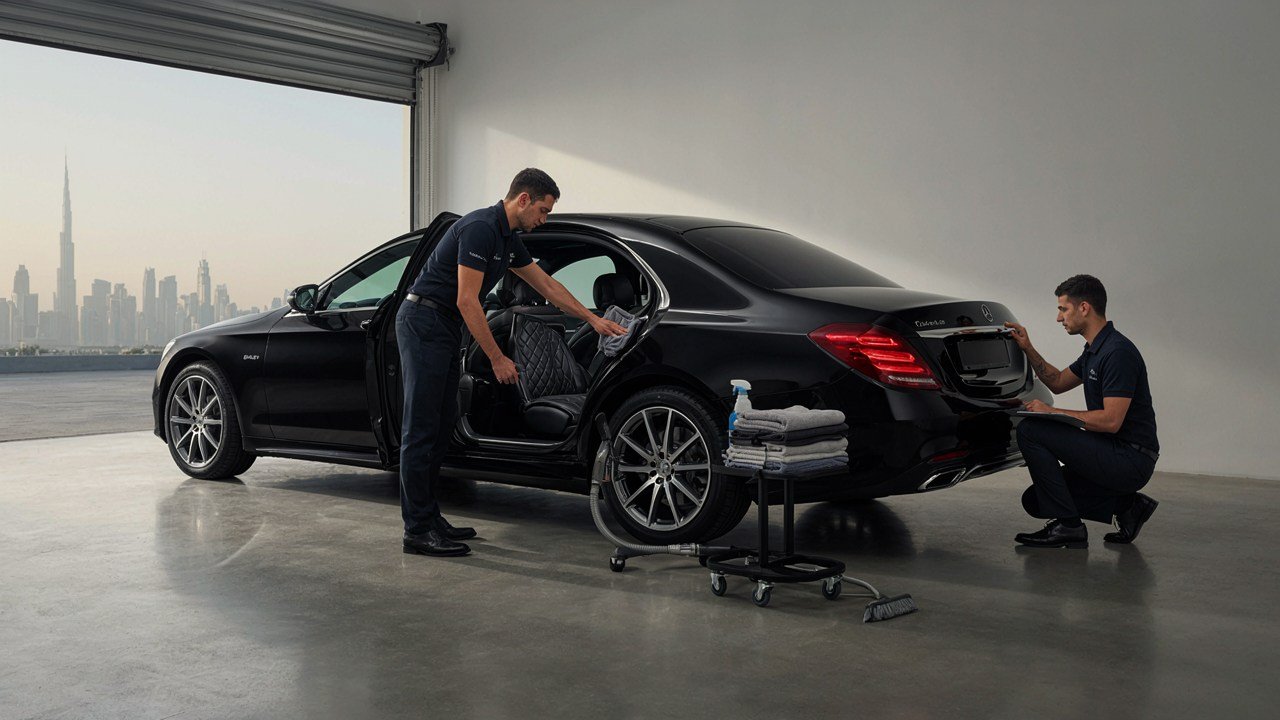
As noted, pre-cooling is essential. The chauffeur should start the vehicle, set the air conditioning to maximum, and allow the cabin to reach a comfortable temperature before the passenger enters.
Ventilated and Cooled Seats
Some premium vehicles offer ventilated or cooled seats, which improve comfort in hot conditions. These are a significant advantage in summer.
Water and Refreshments
Cold water should be available in the vehicle. In summer, hydration is important, and a chilled bottle of water on arrival is a small but meaningful comfort.
Waiting Arrangements in Summer
How a chauffeur waits during a meeting or appointment matters more in summer than at other times of year.
The Vehicle Remains Cool
The chauffeur should keep the vehicle cool while waiting. This means running the air conditioning, or at least maintaining a temperature that allows the cabin to cool quickly when the passenger returns.
Proximity to the Entrance
The chauffeur should position the vehicle as close to the entrance as possible, so the passenger’s exposure to the heat is minimised. Where parking restrictions apply, the chauffeur may need to wait nearby and bring the vehicle around when the passenger is ready.
Communication
Passengers should be able to contact the chauffeur easily—by message or call—so the vehicle can be brought to the entrance at the right moment. This avoids the passenger waiting outside in the heat.
Shaded Parking
Where possible, the chauffeur should park in shade while waiting. This reduces the load on the air conditioning and keeps the vehicle cooler.
Extended Waiting
For long meetings, the chauffeur may need to balance keeping the vehicle cool with fuel consumption and engine wear. A professional service manages this efficiently, cooling the vehicle periodically rather than running the engine continuously.
Structuring a Summer Itinerary
A summer day in Dubai should be structured differently from a winter day.
Fewer Activities, More Rest
Heat is exhausting. Plan fewer activities per day and allow more time at each. Build in rest periods, ideally in air-conditioned environments.
Indoor During Peak Heat
Schedule indoor activities—malls, museums, galleries, indoor attractions—during the hottest hours. Outdoor activities should be reserved for early morning and evening.
Shorter Journeys
Where possible, keep journeys short. Long drives in summer are tiring, even in a cooled vehicle. Grouping activities geographically reduces time on the road.
The Vehicle as a Base
Between activities, the vehicle serves as a cool base. Passengers can rest, hydrate, and prepare for the next stop without exposure to the heat. For visitors planning sightseeing, a Dubai city tour can help organise stops around their preferred schedule.
Hydration and Breaks
Build in hydration breaks. Even in air-conditioned environments, summer heat increases fluid loss.
A Realistic Example
A summer day might look like this:
- 8:00 AM: Pickup from hotel. Early visit to an outdoor attraction or a walk along the creek.
- 10:30 AM: Return to the vehicle, transfer to an indoor attraction or mall.
- 12:00 PM – 3:00 PM: Indoor activities, lunch, shopping. Vehicle on standby.
- 3:30 PM: Return to hotel for rest.
- 6:30 PM: Pickup for evening activities—dinner, waterfront walk, or an outdoor attraction.
- 9:00 PM: Return to hotel.
This structure avoids the worst of the heat and uses the vehicle as a bridge between cool environments.
Special Considerations for Different Passengers
Different passengers experience heat differently, and summer planning should reflect this.
Elderly Passengers
Elderly passengers are more vulnerable to heat. They should be moved quickly between air-conditioned environments, and the vehicle should be pre-cooled. Waiting outside should be avoided entirely. Hydration should be encouraged.
Young Children
Children are also vulnerable. Car seats can become hot, and children may not recognise the signs of overheating. The vehicle should be cool before children enter, and the seats should be checked for hot surfaces. Sunshades and tinted windows provide additional protection.
Passengers with Medical Conditions
Some medical conditions—cardiac conditions, respiratory conditions, and others—are affected by heat. Passengers with such conditions should be moved efficiently and kept cool. Medication should be stored appropriately.
Visitors Not Acclimatised
Visitors from cooler climates may find Dubai’s summer heat genuinely difficult, even dangerous. They should be advised to limit outdoor exposure and to use the vehicle as a refuge.
Airport Transfers in Summer
Airport transfers in summer require particular attention.
Pre-Cooled Pickup
The vehicle should be pre-cooled before the passenger arrives. The chauffeur should monitor the flight and time the pre-cooling accordingly.
Minimising Outdoor Time
The passenger should be met at the terminal and escorted directly to the vehicle, which should be waiting as close as possible. The walk from the terminal exit to the vehicle should be as short as possible.
Luggage Handling
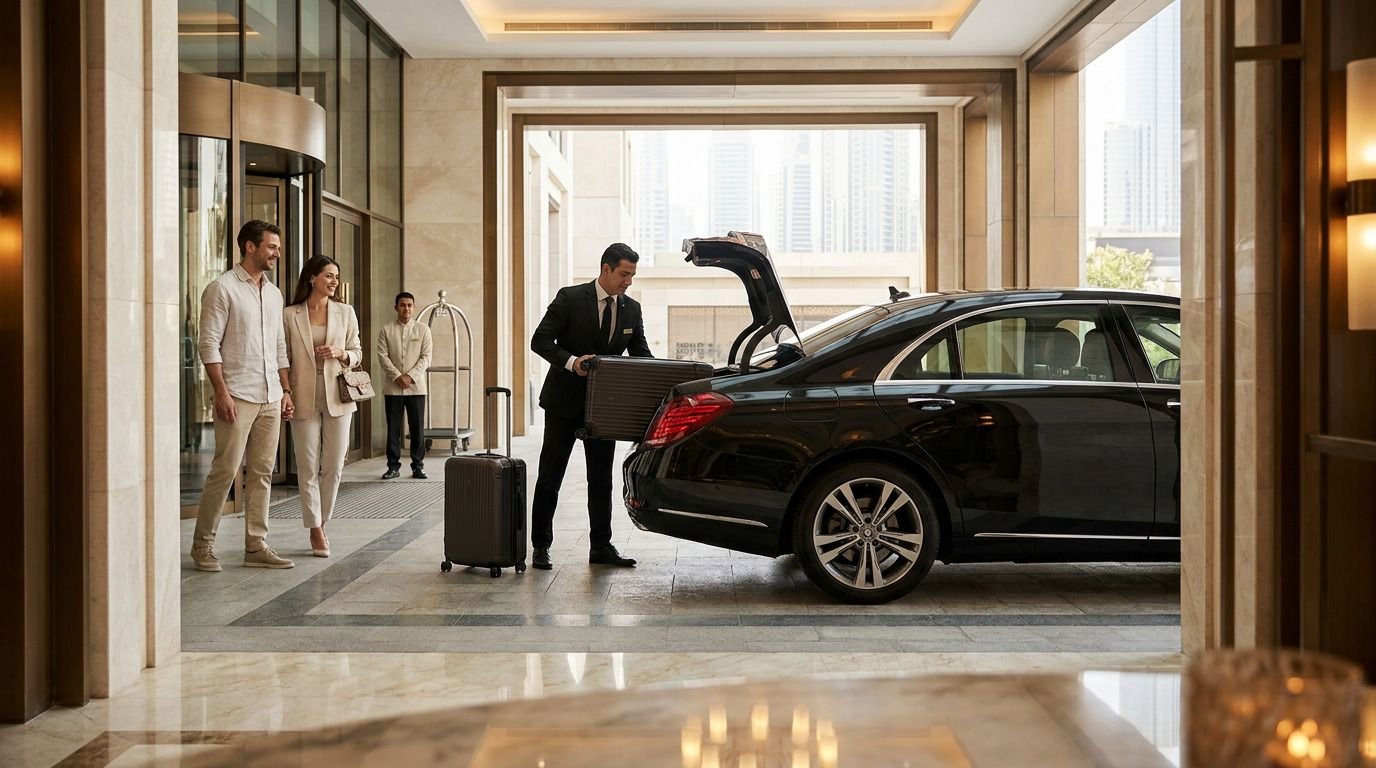
The chauffeur handles luggage, so the passenger is not exposed to the heat while loading.
Cool Cabin on Arrival
The cabin should be at a comfortable temperature when the passenger enters. Cold water should be available. For journeys to or from Dubai airport, see the details of our airport transfer service in Dubai.
Cost Considerations
Chauffeur services in summer may involve additional considerations for cooling and waiting.
Pre-cooling time. Some services include pre-cooling within the booking; others may charge for extended vehicle running time.
Waiting with air conditioning. If the vehicle remains cool during a long wait, this may be reflected in the booking terms. Confirm the policy when booking.
Full-day bookings. For summer days with multiple activities and waiting periods, full-day bookings offer the best value and the greatest flexibility. Review our chauffeur service options to understand the types of journeys that can be arranged.
What is included. Reputable providers include the chauffeur, vehicle, fuel, tolls within Dubai, parking, and insurance.
A Summer Planning Checklist
Before a summer journey or day, confirm the following:
- Pickup times scheduled for early morning or evening where possible
- Vehicle pre-cooled before pickup
- Air conditioning confirmed as effective
- Rear climate control and tinted windows where required
- Cold water available in the vehicle
- Waiting arrangements confirmed, with the vehicle kept cool
- Itinerary structured around indoor activities during peak heat
- Rest periods built into the day
- Special considerations for elderly passengers, children, or those with medical conditions
- Airport transfer timings and meeting points confirmed
Conclusion: Planning Around the Heat, Not Against It
Dubai’s summer is demanding, but it is manageable with the right approach. The key is to plan around the heat rather than to ignore it. That means early starts, indoor activities during peak hours, pre-cooled vehicles, comfortable waiting arrangements, and an itinerary that respects the physical limits of passengers and the reality of the climate.
A chauffeur service is particularly valuable in summer because it removes the elements that make heat difficult—waiting outside, walking to parking, entering hot vehicles, and managing logistics in the sun. It turns the vehicle into a cool, comfortable base that connects one air-conditioned environment to the next. You can also explore our fleet to compare vehicle options for different passenger and luggage requirements.
For visitors and residents alike, summer in Dubai is entirely enjoyable when the planning is right. The heat is a constant, but with the right transport arrangements, it becomes a background condition rather than an obstacle.
Frequently Asked Questions (FAQs)
Q1: Is it practical to use a chauffeur service in Dubai during summer?
Yes. In fact, a chauffeur service is more valuable in summer because it provides pre-cooled vehicles, door-to-door service, and a cool base between activities, reducing exposure to extreme heat.
Q2: How do chauffeurs keep vehicles cool in summer?
Chauffeurs pre-cool the vehicle before pickup by running the air conditioning, and keep it cool during waiting periods. Tinted windows, sunshades, and ventilated seats further improve comfort.
Q3: What is the best time of day to travel in summer?
Early morning and evening are the most comfortable. Midday, between 11:00 AM and 4:00 PM, should be avoided for outdoor activity and long journeys.
Q4: How should I plan a day’s itinerary in summer?
Schedule indoor activities during the hottest hours, outdoor activities in the early morning or evening, and build in rest periods. Use the vehicle as a base between stops.
Q5: Are chauffeur vehicles air-conditioned effectively?
Reputable providers maintain their air conditioning systems and ensure vehicles cool quickly. Premium vehicles often have separate rear climate control, tinted windows, and ventilated seats.
Q6: How does the chauffeur handle waiting during a meeting in summer?
The chauffeur keeps the vehicle cool and positions it close to the entrance, bringing it around when you are ready. This minimises the time spent outside.
Q7: What should I do if I am travelling with elderly passengers or young children in summer?
Pre-cool the vehicle before they enter, avoid waiting outside, keep cold water available, and move quickly between air-conditioned environments. Confirm child seats are fitted and cool before use.
Q8: Do airport transfers work differently in summer?
The principle is the same, but pre-cooling and minimising outdoor time are more important. The chauffeur should meet you at the terminal and escort you directly to a cool vehicle.
Q9: Are there additional charges for pre-cooling or extended waiting in summer?
This depends on the provider. Some include pre-cooling and waiting within the booking; others may charge for extended vehicle running time. Confirm the policy when booking.
Q10: Is it safe to leave items in a vehicle during summer?
No. Temperatures inside a parked vehicle can reach dangerous levels. Do not leave children, pets, electronics, medication, or perishables in a vehicle at any time during summer.